
Clinical Research and Public Health
Abstract
BACKGROUND. Body weight and insulin resistance in women increase in midlife. It is not known whether this is driven by the menopause transition or solely by chronological aging. We aimed to determine the role of the menopause transition and menopause-related BMI changes in the development of insulin resistance in midlife women. METHODS. Mixed effects, linear spline modeling of longitudinal data in 1315 women, 42- to 52-years-old, pre- or early perimenopausal in 1995 to 1996 with up to 16 follow up visits by 2018. Homeostatic-model-assessed-insulin-resistance (HOMA-IR) was measured up to 12 times. Date of final menstrual period (FMP) was prospectively determined. RESULTS. HOMA-IR increased faster over a 4-year interval extending from 1.5 years prior to 2.5 years after the FMP, than in the years before or after it; p value for both slope changes < 0.0001. In the referent woman (White, age 52 years at FMP, non-smoker, body mass index [BMI] 25.6 kg/m2 at baseline, and not on sex hormone therapy or statins), the average annualized rate of HOMA-IR increase, adjusted for covariates including changes in BMI, was 1.2%, 4.3%, and 0.9% respectively, before, during, and after the 4-year transition. CONCLUSION. Consistent with an independent effect of the menopause transition, insulin resistance increased significantly faster during the transition (from 1.5 years before the to 2.5 years after the FMP) than in the years preceding or following the transition. Future studies need to investigate mechanisms underpinning this observed association and determine the impact of lifestyle on dampening menopause-associated increases in insulin resistance. FUNDING. National Institutes of Health.
Authors
Arun S. Karlamangla, Wei Juan Han, Preethi Srikanthan, Albert Shieh, Duncan Thomas, Barbara Sternfeld, Monique M. Hedderson, Gail A. Greendale
Abstract
BACKGROUND. Long-COVID, or post-acute sequelae of COVID-19 (PASC), leads to debilitating physical and cognitive deficits. No PASC molecular signature present in patients with diverse symptoms has been described. While PASC engages pathways regulating pro-fibrotic programs, no comparison of PASC with fibrosis-associated epigenetic landscapes has been reported at the bulk or single-cell level. We hypothesize that a subset of DNA methylation changes are present in PASC patients from multiple cohorts, predominate in specific immune or inflammatory cell-types, and overlap with the epigenetic profile of patients at risk of pulmonary fibrosis. METHODS. Two distinct prospective cohorts, in 2021 and in 2022-24, involving 203 patients with PASC underwent bulk whole genome methylation sequencing (WGMS). Single-cell WGMS data was generated from an independent PASC cohort. Sixty-eight pre-pandemic patients with conditions elevating risk of pulmonary fibrosis development were compared with PASC. RESULTS. Sixteen differentially methylated regions distinguished PASC versus multiple independent, healthy controls. Single-cell analysis of these regions indicated trending relative hypermethylation at multiple cell types, with T4 lymphocytes eliciting hypermethylation at most of the sequences identified to be PASC-specific DMRs in the bulk analysis. Patients at risk of pulmonary fibrosis development elicited DNA methylation changes overlapping PASC. CONCLUSION. In two independent prospective cohorts, blood WGMS identifies differentially methylated regions associated with PASC. Hypermethylation of these regions is predominantly, although not exclusively, associated with T4 lymphocytes and overlap with changes present in pre-pandemic pulmonary fibrosis at-risk patients. FUNDING. National Institutes of Health award HL160661 (AJ); and AI173035 (AJ and RSA).
Authors
Andy Madrid, Joseph Balnis, Lisa A. Drake, Anupama Tiwari, Vraj J. Patel, Paul J. Feustel, Jihua Liu, Sündüz Keleş, Fangxiu Xu, Chris L. Wright, Alvaro G. Hernandez, Recai Yucel, Marc A. Judson, Harold A. Singer, Reid S. Alisch, Ariel Jaitovich
Abstract
BACKGROUND. Hepatocellular carcinoma (HCC) exhibits molecular heterogeneity that challenges histopathologic classification and biomarker discovery. We assessed whether spatially resolved N-glycan imaging with machine learning could classify tumor regions and infer glutamine synthetase (GS) status. METHODS. In this retrospective study, MALDI mass spectrometry imaging of N-glycans was performed on formalin-fixed, paraffin-embedded sections from two independent cohorts (discovery, n = 88; validation, n = 60) with pathologist annotation. An XGBoost classifier was trained on 90 discriminative N-glycan features using patient-grouped cross-validation. Performance was assessed by AUC for pixel- and biopsy-level discrimination of tumor from adjacent non-tumor tissue, and for GS status classification. RESULTS. Pixel-level AUCs were 0.95 (cross-validation) and 0.89 (external validation); biopsy-level AUCs were 1.0 and 0.97, correctly identifying 97% of tumor-containing biopsies. Probability maps recapitulated pathologist-defined boundaries; UMAP embeddings captured inter- and intratumoral heterogeneity. Discriminative species (m/z 2393.846, 1905.634, 1743.579, 1809.639) reflected complex, fucosylated, branched remodeling. N-glycans bearing six GlcNAc residues were enriched in GS+ (n = 45) versus GS− (n = 17) tumors (P = 0.001) and discriminated GS status (AUC = 0.75), consistent with GLUL and MGAT5 upregulation in TCGA-LIHC. CONCLUSION. MALDI N-glycan imaging with machine learning enables spatially resolved, objective classification of HCC and links glycan phenotypes to tumor-associated metabolic programs. TRIAL REGISTRATION. Not applicable; retrospective analysis of archival, de-identified tissue. FUNDING. NIH/NCI R01CA285370, 1R01CA289381, R33CA267226, R01CA282022, R21CA263464, R21CA286287, R01CA253460, S10OD030212, R01CA251155, R01CA250227, U01CA271887, P50CA295495, P30CA138313, P20GM130457, P30DK123704, P30DK120531,R24DK139775; NIH/NIA R01AG078702; Smart State Endowment, State of South Carolina; LeDucq Foundation.
Authors
Muhammed F. Bayram, Jade K. Macdonald, Andrew DelaCourt, Peggi M. Angel, Richard R. Drake, Aatur Singhi, David Geller, Satdarshan P. Monga, Amit Singal, Anand Mehta
Abstract
BACKGROUND. Neurological Long COVID (n-LC) includes persistent cognitive and autonomic symptoms after SARS-CoV-2 infection. Prior studies of post-COVID conditions have described diverse humoral autoreactivity. It remains unclear whether n-LC is associated with a consistent CNS-directed humoral signature. METHODS. We performed a cross-cohort case-control analysis to detect autoantibodies in cerebrospinal fluid (CSF) and serum from n-LC participants. In the Yale COVID Mind Study cohort, CSF from n-LC participants and pre-pandemic and recovered controls was assessed using mouse brain immunofluorescence and proteome-wide phage immunoprecipitation sequencing (PhIP-Seq), followed by supervised modeling and orthogonal validation assays. In the Epidemiology, Immunology, and Clinical Characteristics of Emerging Infectious Diseases with Pandemic Potential (IDCRP EPICC) cohort, post-COVID sera collected prior to iPhone- or iPad-based cognitive screening were profiled by PhIP-Seq and compared between participants with and without cognitive impairment. RESULTS. CSF immunoreactivity on mouse brain tissue was observed in both n-LC and controls, with similar overall frequencies. PhIP-Seq identified sparse, patient-specific peptide reactivities to nuclear and neuronal proteins in CSF and serum. Supervised models provided limited discrimination between cases and controls. Candidate autoantigens had limited disease specificity on orthogonal testing. EPICC serum autoantibody profiling similarly failed to distinguish individuals with and without cognitive impairment. CONCLUSIONS. Across cohorts and compartments, n-LC was not associated with a shared CNS-directed autoantibody signature using the approaches employed. Observed heterogeneity may reflect biological diversity, although limited statistical power to detect a shared response cannot be excluded. FUNDING. Grants HU00012020067, HU00012120103, HU00011920111, R01NS125693, R01MH125737, and R01AI157488 from the Defense Health Program and NIH.
Authors
Debanjana Chakravarty, Ravi Dandekar, Vishal D. Lashkari, Iris Tilton, Lindsay McAlpine, Jennifer Chiarella, Allison Nelson, Thomas Ngo, PeiXi Chen, Chung-Yu Wang, Aditi Saxena, Bryan Castillo-Rojas, Kelsey Zorn, David R. Tribble, Timothy H. Burgess, Leah H. Rubin, Stephanie A. Richard, Brian K. Agan, Simon D. Pollett, Shelli Farhadian, Serena Spudich, Samuel J. Pleasure, Michael R. Wilson
Abstract
BACKGROUND. This prospective, single-arm, multicenter phase 1/2 trial evaluated vorinostat added to standard graft-versus-host disease (GVHD) prophylaxis in pediatric, adolescent, and young adult (AYA) patients undergoing allogeneic hematopoietic cell transplantation (HCT) from HLA-matched related, HLA-matched unrelated, and haploidentical donors. METHODS. Patients aged 3–39 years received twice-daily vorinostat with tacrolimus/methotrexate after HLA-matched HCT from day −10 to +30, or with post-transplant cyclophosphamide/tacrolimus/mycophenolate mofetil after haploidentical HCT from day +5 to +30. The primary endpoint was cumulative incidence of grade II–IV acute GVHD by day +100. All outcomes were based on intention-to-treat analysis. RESULTS. Forty-three patients were enrolled; median age was 19 years, with 74% receiving HLA-matched and 26% haploidentical HCT. The recommended phase 2 dose was 60 mg/m² twice daily. No dose-limiting toxicities, unexpected vorinostat-related serious adverse events, or primary graft failures occurred. Median neutrophil and platelet recovery occurred at 14 and 18 days, respectively. Day +100 grade II–IV and III–IV acute GVHD were 14% (95% CI, 5.6, 26) and 4.7% (95% CI, 0.83, 14), respectively. One-year overall survival was 88.4% (95% CI, 79.3, 98.5), relapse 14% (95% CI: 5.6, 26), nonrelapse mortality 4.7% (95% CI: 0.8, 14), and GVHD-free/relapse-free survival 55.8% (95% CI: 42.8, 72.8). Correlative studies demonstrated on-target HDAC activity, with increased histone acetylation and lower proinflammatory cytokines. CONCLUSION. These findings support randomized evaluation of vorinostat-based GVHD prophylaxis in pediatric and AYA HCT. TRIAL REGISTRY. ClinicalTrials.gov, NCT03842696.
Authors
Nicolas Parnell, Xiao Cao, Jan H. Beumer, Thomas M. Braun, Yilei Cui, Gary J. Fisher, Guoqing Hou, Julianne Holleran, Tracey Churay, Michelle Rozwadowski, Luna Heider, Mark T. Vander Lugt, Carrie L. Kitko, April L. Rahrig, Ed Peres, Kirsten M. Williams, Julie-An Talano, Vanessa A. Fabrizio, Ghada Abusin, Gregory A. Yanik, John Magenau, Mary Riwes, Marcus J. Geer, Sarah Anand, Monalisa Ghosh, Attaphol Pawarode, Kristen Votruba, Pavan Reddy, Sung Won Choi
Abstract
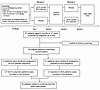
BACKGROUND Dichloroacetate (DCA) is an orally administered structural analog of pyruvate, an endogenous pyruvate dehydrogenase kinase inhibitor.METHODS We conducted a phase III multicenter trial in 34 children with pyruvate dehydrogenase complex deficiency (PDCD). Participants were randomly allocated to 4 months of treatment with DCA or a placebo, followed by a 1-month washout period and crossover to the alternate arm, and could continue into an open-label extension period. DCA dosing was predetermined by pharmacogenomic analysis of GSTZ1, which modulates DCA metabolism. The primary endpoint was the observer-reported outcomes motor domain (ObsROmotor) score. Additional assessments evaluated motor function, plasma lactate levels, and survival.RESULTS Chronic DCA was well tolerated and safe. The primary endpoint, ObsROmotor, was not statistically significantly different between the treatment and placebo groups (P = 0.512). However, longer-term treatment, including the open-label extension, showed a statistically significant treatment effect (P = 0.002), especially in participants with higher baseline motor impairment (ObsROmotor ≥ 8; P = 0.001). DCA decreased plasma lactate –0.48 (0.82) mmol/L (–20%; P = 0.006). Survival of participants was significantly greater than that of a natural history cohort (log-rank P = 0.027).CONCLUSION Longer-term treatment with DCA, dosed based on GSTZ1 haplotype, is safe and was associated with a statistically significant improvement in patient motor function, plasma lactate, and survival.FUNDING NIH (R01FD005407; R42HD089804), University of Florida Department of Medicine, Saol Therapeutics.
Authors
Peter W. Stacpoole, Jose E. Abdenur, Jirair K. Bedoyan, Lorenzo Botto, Gregory M. Enns, Marni J. Falk, Rebecca Ganetzky, Cheryl Garganta, Kevin Glinton, Andrea Gropman, Sharon Hamm, Eugenia Henry, Nicola Longo, Richard Neiberger, Russell P. Saneto, Fernando Scaglia, Sub H. Subramony, Jerry Vockley, Richard E. Wagner
Abstract
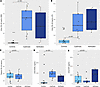
Early diagnosis of cystinosis is critical to limit disease progression. YKL-40, a protein in the chitinase family, released by inflammatory cells, may be a useful biomarker for cystinosis. In a case-control study of 10 children with cystinosis and 20 without cystinosis, matched by age and baseline eGFR, we measured urine YKL-40, NGAL, and EGF. A lateral flow device (LFD) for YKL-40 was also developed and tested. Urine YKL-40 was over 200-fold higher in children with cystinosis (64.6 ng/mL [IQR: 23.4, 83.8]) compared with controls (0.3 [IQR: 0.3, 0.79]; P = 0.0001) with excellent diagnostic discrimination (AUC = 0.99) that was superior to other biomarkers. LFD measurements for YKL-40 showed similar results (AUC = 0.93). YKL-40 results were verified in 5 cystinosis patients, and YKL-40 staining was markedly higher in kidney biopsies from cystinosis patients than in healthy controls. Urine YKL-40 has excellent diagnostic potential for cystinosis, and point-of-care technologies may facilitate early screening and management of this disease.
Authors
Jason H. Greenberg, Serena D Souza, Heather R. Thiessen Philbrook, Wassim Obeid, Avi Z. Rosenberg, Elena Levtchenko, Koenraad Veys, Susan L. Furth, Chirag R. Parikh
Abstract
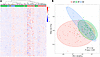
BACKGROUND Elucidating immune signals through well-defined cohorts of pediatric acute pancreatitis (AP) and chronic pancreatitis (CP) patients is critical. This study aimed to evaluate plasma chemokine and cytokine levels in pediatric participants with CP, compared with AP and healthy controls (HCs), to identify unique biomarkers of CP.METHODS Individuals were identified from a prospectively collected pediatric cohort (n = 146). Immunoproteins (n = 247) were measured using the NULISAseq platform on samples from individuals with CP (n = 71), AP (n = 55), and HCs (n = 20).RESULTS The measured analytes showed separation among the 3 groups (R2 = 0.13, P < 0.001). In the CP group, TRANCE, TWEAK, FLT-1, HGF, and TRAIL were increased when compared with HC and AP patients (FDR-corrected P <0.05). A multivariable logistic regression model including all 5 proteins provided an AUC of 0.94 (0.93–0.96) for differentiating samples from CP versus AP or HC samples. In the AP group, CRP, IL-6, CD3E, ENRAGE, and MIF were elevated compared with HCs, while FGF-2, TAFA-5, IL-33, TRANCE, and CXCL12 were downregulated in the same acute time period (FDR-corrected P < 0.05). In the 21 patients with AP for whom follow-up samples were obtained, there was a notable decrease in sequential expression of IL-6 and CRP over 12 months and increased expression of CCL25, TAFA-5, and TRANCE proteins. Additionally, TRANCE was expressed on CP pancreatic tissue.CONCLUSIONS TRANCE was increased in pediatric patients with CP and decreased in those with AP during a flare. Future studies are needed to investigate the role of TRANCE and other analytes in the pathogenesis of CP.
Authors
Peter R. Farrell, Bomi Lee, Faizan Ahmed, Maria E. Moreno-Fernandez, Ajay Dixit, Juan Pablo Gurria, Nicholas J. Ollberding, Qing Duan, Vineet Garlapally, Phoebe Christian, Sohail Z. Husain, Maisam Abu-El-Haija

Abstract
BACKGROUND Acute interstitial nephritis (AIN) is a common cause of acute kidney injury (AKI), but the diagnosis may be missed as kidney biopsies are rarely obtained when acute tubular injury (ATI) is suspected.METHODS The Kidney Precision Medicine Project is a cohort study that obtains kidney biopsies from individuals with AKI, which undergo pathologic and molecular interrogation. We compared ATI and AIN cases among the first 60 AKI participants.RESULTS On clinicopathologic adjudication, 30 patients (50%) had a primary adjudicated diagnosis of ATI, 13 (22%) patients had AIN, 9 (15%) had diabetic nephropathy, and 3 (5%) had other conditions. There were increased interstitial white blood cells and tubulitis (P < 0.05 for both) in AIN compared with ATI. Prior to biopsy, the treating clinician suspected ATI in 83% of the cases with adjudicated ATI, while the treating clinician suspected AIN in 54% of the cases with AIN. Tissue transcriptomic signatures showed enrichment of proinflammatory signaling and increased expression of CXCL9, a chemokine induced by IFN-γ, in myeloid cells of participants with AIN. CXCL9 localized to inflammatory infiltration in spatial transcriptomic data.CONCLUSION Adjudication of kidney biopsies revealed distinct pathologic and molecular profiles between ATI and AIN. Kidney biopsy should be considered more frequently in AKI, as AIN is clinically underrecognized.TRIAL REGISTRATION ClinicalTrials.gov NCT04334707.FUNDING National Institute of Diabetes and Digestive and Kidney Diseases grants U01DK133081, U01DK133091, U01DK133092, U01DK133093, U01DK133095, U01DK133097, U01DK114866, U01DK114908, U01DK133090, U01DK133113, U01DK133766, U01DK133768, U01DK114907, U01DK114920, U01DK114923, U01DK114933, U24DK114886, UH3DK114926, UH3DK114861, UH3DK114915, and UH3DK114937.
Authors
Jennifer A. Schaub, Rajasree Menon, Ricardo Melo Ferreira, Elizabeth Kiernan, Insa M. Schmidt, Christine P. Limonte, Soumya Yennapureddy, Ying-Hua Cheng, Leal Herlitz, Avi Z. Rosenberg, Joel M. Henderson, Kelly D. Smith, Jeffrey B. Hodgin, Edgar Otto, Gilbert W. Moeckel, Lloyd G. Cantley, Suman Setty, Ulysses G.J. Balis, Dawit Demeke, Agnes B. Fogo, Andrew S. Bomback, Vivette D. D’Agati, Isaac E. Stillman, Jose R. Torrealba, Allen R. Hendricks, Erika Bracamonte, Vanessa Moreno, Pavan Bhatraju, Amy K. Mottl, Frank C. Brosius, Bijin Thajudeen, Steven G. Coca, Paul M. Palevsky, Parmjeet S. Randhawa, Raghavan Murugan, Laura Barisoni, Charles E. Alpers, Steven Menez, F. Perry Wilson, Dennis G. Moledina, Michael T. Eadon, Matthias Kretzler, Jonathan Himmelfarb, Chirag R. Parikh, the Kidney Precision Medicine Project
Abstract
BACKGROUND. Primary laminopathies are a heterogeneous group of rare diseases caused by nuclear lamina dysfunction due to pathogenic LMNA variants. However, despite their ubiquitous expression, LMNA variants have rarely been linked to chronic kidney disease (CKD). Here, we systematically investigate clinical implications and functional underpinnings of a distinct LMNA missense variant (lamin A/C p.(Arg349Trp)) that has sporadically been found in patients with a complex phenotype including lipodystrophy, proteinuria, and focal segmental glomerulosclerosis (FSGS). METHODS. In clinical and functional terms, we compare lamin A/C Arg349Trp with missense changes at Arg482, the most common hotspot residue for type 2 familial partial lipodystrophy (FPLD2). In particular, we assess renal endpoints in corresponding patient cohorts and investigate disease-associated alterations in vitro. RESULTS. In contrast to FPLD2 patients, individuals with lamin A/C Arg349Trp experience high-grade proteinuria and a rapid decline of glomerular filtration rate with kidney failure at a median age of 43 years. Mechanistically, we demonstrate that Arg349Trp associates with an abrogation of the structural interaction between lamin A/C and nucleoporin 155, nuclear pore complex aggregation, and an alteration of TGF-β1-dependent signaling. CONCLUSIONS. While patients with Lamin A/C Arg482 missense changes are at very low risk for progressive CKD, patients harboring Arg349Trp show nephrotic range proteinuria and kidney failure in midlife. Hence, high-grade proteinuric kidney disease is genotype-specific and patients with the Arg349Trp substitution require early renoprotective intervention to potentially halt progression and prevent kidney failure. FUNDING. German Research Foundation, project IDs 502928386, 445703531, and grants HA 9779/2-1, HA 6908/4-1, HA 6908/7-1, HA 6908/8-1, HA 6908/12-1.
Authors
Sebastian Sewerin, Charlotte Aurnhammer, Mohamed Hamed, Gwladys Revêchon, Ria Schönauer, Christin Findeisen, Konstanze Miehle, Šárka Tesařová, Theodoros Georgomanolis, Carsten Bergmann, Constantin A. Wolff, Marek Kollár, Baris Akinci, David Araujo-Vilar, Giovanni Ceccarini, Éva Csajbók, Alessandra Gambineri, Martin Heni, Thomas Scherer, Iztok Štotl, Ekaterina Sorkina, Marie-Christine Vantyghem, Elena Vorona, Martin Wabitsch, Julia von Schnurbein, Camille Vatier, Joëlle Roume, Yves Reznik, Maria Eriksson, Wolfram Antonin, Corinne Vigouroux, Jan Halbritter
No posts were found with this tag.


