
Genetics
Abstract
The distal nephron segments play a critical role in maintaining electrolyte balance, yet the mechanisms that preserve epithelial identity and segmental organization within this region remain poorly defined. Yes-associated protein (YAP), a key effector of Hippo signaling, is essential for kidney development, but its function in distal nephron epithelia is unknown. Using a genetic gain-of-function approach to activate YAP selectively in distal nephron segments, we found that sustained YAP activity profoundly disrupts epithelial organization and nephron patterning. Lineage tracing revealed that both distal convoluted tubule and connecting tubule cells originate from Slc12a3-expressing cells, and YAP activation in these segments led to increased proliferation, displacement of lineage-labeled cells beyond expected segment boundaries, and loss of segment-specific gene expression. These changes were accompanied by defects in apicobasal polarity and junctional integrity, consistent with epithelial plasticity. Unexpectedly, YAP activation in distal nephron segments also suppressed proximal tubule gene expression, indicating non-cell-autonomous effects on nephron differentiation. Together, these findings identify YAP as a critical regulator of epithelial identity in the distal nephron segments and reveal a previously unrecognized role for Hippo signaling in coordinating intersegmental organization during kidney development.
Authors
Zeinab Dehghani-Ghobadi, Eunah Chung, Mohammed Sayed, Christopher Ahn, Hyojin Alex Choi, Annissa Aamoum, Benjamin R. Thomson, Yueh-Chiang Hu, Hee-Woong Lim, Joo-Seop Park
Abstract
Selecting appropriate preclinical models is fundamental for translational oncology, yet a large-scale, multi-omic quantitative comparison of their similarity to primary human tumors is lacking. To address this, we integrated transcriptomic, proteomic, and genomic profiles from over 10,000 primary tumors from The Cancer Genome Atlas (TCGA) and the Clinical Proteomic Tumor Analysis Consortium (CPTAC), alongside 4,000 preclinical models. Using a robust computational framework, we revealed a clear hierarchy of transcriptomic and proteomic similarity to patient tumors: patient-derived xenografts (PDXs) > patient-derived organoids (PDOs) = PDX-derived organoids (PDXOs) > cell lines. We also quantified high molecular conservation (Pearson correlation coefficient = 0.96) across paired in vitro to in vivo platform (organoids to PDX) transitions. Furthermore, genomic analysis demonstrated that whole-exome sequencing (WES) outperforms RNA sequencing (RNA-Seq) in detecting DNA variants, and it identified a clonal complexity hierarchy (cell lines > PDXOs > PDXs > PDOs) reflecting the impact of passaging history on intra-tumor heterogeneity. Ultimately, this study delivers a comprehensive quantitative benchmark, establishing a population-level hierarchy of molecular similarity between preclinical models and primary tumors, and providing a data-driven reference for model selection. These findings offer a data-driven framework for selecting models that balance biological representativeness with experimental practicality.
Authors
Zixuan Xie, Jia Xue, Binchen Mao, Hengyuan Liu, Wubin Qian, Jingjing Wang, Xiaobo Chen, Sheng Guo
Abstract
Authors
Enrique Gonzalez Saez-Diez, Xutong Xue, Amy Tam, Hyo-Min Kim, Siofra Carty, Joshua Rong, Monica Ferrer-Socorro, Kathryn Yang, Darius Ebrahimi-Fakhari
Abstract
Several genes guide inner ear development, and mutations in these genes can cause malformations that result in congenital hearing loss. However, the contribution of noncoding regulatory elements remains largely unclear. This study investigates the function of distal enhancer elements in the transcriptional regulation of GDF6, a gene implicated in cochlear development. Using mouse models with targeted deletions, human inner ear organoids, and CRISPR interference (CRISPRi), we identified a downstream regulatory interval harboring a developmental enhancer required to maintain GDF6 expression during otic epithelial maturation and cochlear morphogenesis. Deletion of this regulatory region or targeting of CRISPRi-based repressors to these regions resulted in decreased GDF6 expression, failure of otic-epithelium development, and prevention of hair cell-like differentiation, reflecting cochlear aplasia observed in patients with corresponding genomic deletions. These findings highlight the contribution of long-range regulatory elements to auditory development and illustrate how their disruption contributes to human deafness.
Authors
Mohammad Faraz Zafeer, Clemer Abad, Havva Ortabozkoyun, Memoona Ramzan, Guney Bademci, Maria C. Robayo, Duygu Duman, Rolen M. Quadros, Shengru Guo, Juan I. Young, Anthony J. Griswold, Channabasavaiah B. Gurumurthy, Derek M. Dykxhoorn, Katherina Walz, Mustafa Tekin
Abstract
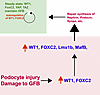
Transcriptional reprogramming has an important role in kidney glomerular disease. Using in vivo murine models of podocyte injury, we studied the roles of the FOXC2 and WT1 transcription factors (TFs) in podocyte injury. Podocytes are a crucial cell type of glomeruli, the filtration units of each nephron. Podocyte injury is often the incipient event leading to chronic kidney disease. It is well established that the TFs FOXC2 and WT1 are required in podocytes to maintain the glomerular filtration barrier. Their role in the response to injury is less well understood. Here, we tested the hypothesis that FOXC2 and WT1 act together to mediate transcriptional reprogramming in response to podocyte injury. Similarly to that of WT1, genome-wide FOXC2 binding to target genes is dynamic during the course of injury, initially increasing, but late in injury there is a dramatic decrease in FOXC2 expression and in its binding to target genes. Podocyte-specific inactivation of FoxC2 or Wt1 in adult mice limits the transcriptional response to injury. Correlating FOXC2 and WT1 ChIP-seq analyses demonstrated that they co-bind many genes expressed in podocytes. Thus, reprogramming the transcriptome involves dynamic changes in the binding of FOXC2 and WT1 to their target genes during a reparative injury response.
Authors
Sandrine Ettou, Anya Greenberg, Sangyoon Lee, Arjun Rajesh, Liang Sun, Nahid Tabibzadeh, Haruka Oishi, Ran Konoe, Phillip J. McCown, Sean Eddy, Victoria Driscoll, Tomoya Miyoshi, Ken Hiratsuka, Jason Lam, R. Sathish Srinivasan, Youngsook L. Jung, Biju Isaac, Mingwei Sun, Mary E. Taglienti, Keith Keller, Hong Chen, Matthias Kretzler, Astrid Weins, Ryuji Morizane, Shira Rockowitz, Valerie A. Schumacher, Dongwon Lee, Jordan A. Kreidberg
Abstract
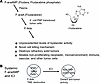
We investigated whether destroying malignant cells and the associated tumor microenvironment (TME) by focal gene therapy would broaden immune checkpoint inhibitor (ICI) effectiveness. We show that ICI antitumor activity against syngeneic (murine) triple-negative breast cancer (TNBC) was augmented when a therapeutic transgene (purine nucleoside phosphorylase, referred to here as E. coli PNP) was used to cleave fludarabine (2-fluoro-arabinofuranosyl adenine) to the anticancer purine base, 2-fluoroadenine (F-Ade). We also established strong repression of anatomically distant, non-PNP-expressing tumors being treated by the same strategy. TNBC cytoreduction was associated with decreased intratumoral PD1+ Tregs, increased granzyme B+ NK cells, elevated MKI67+ T8 cells, and rapid immune clearance. Because F-Ade works by a mechanism that destroys quiescent neoplastic and supporting cells in the microenvironment, and since resistance to ICIs depends upon an intact TME, tumor killing by this approach offers a means to sensitize refractory malignancies to immune ablation and points to broad applicability against numerous cancer subtypes.
Authors
Regina Rab, Jeong S. Hong, Brendan L.C. Kinney, Nicole C. Schmitt, William B. Parker, Adrianna Westbrook, Kelsey B. Bennion, Mandy L. Ford, Douglas H. Weitzel, Paula L. Miliani de Marval, Eric J. Sorscher, Annette Ehrhardt
Abstract
Biallelic loss-of-function variants in the adaptor protein complex 4 (AP-4) disrupt trafficking of transmembrane proteins at the trans-Golgi network, including the autophagy-related protein 9A (ATG9A), leading to childhood-onset hereditary spastic paraplegia (AP-4-HSP). AP-4-HSP is characterized by features of both a neurodevelopmental and degenerative neurological disease. To investigate the molecular mechanisms underlying AP-4-HSP and identify potential therapeutic targets, we conducted an arrayed CRISPR/Cas9 loss-of-function screen of 8,478 genes, targeting the ‘druggable genome’, in a human neuronal model of AP-4 deficiency. Through this phenotypic screen and subsequent experiments, key modulators of ATG9A trafficking were identified, and complementary pathway analyses provided insights into the regulatory landscape of ATG9A transport. Knockdown of ANPEP and NPM1 enhanced ATG9A availability outside the trans-Golgi network, suggesting they regulate ATG9A localization. These findings deepen our understanding of ATG9A trafficking in the context of AP-4 deficiency and offer a framework for the development of targeted interventions for AP-4-HSP.
Authors
Marvin Ziegler, Cedric Günter, Julian E. Alecu, Xutong Xue, Hyo-Min Kim, Afshin Saffari, Alexandra K. Davies, Mustafa Sahin, Darius Ebrahimi-Fakhari

Abstract
Cystic fibrosis (CF) is a life-limiting genetic disorder caused by deleterious variants in the CFTR gene that results in altered mucus impairing the airway epithelia. Durable correction of these variants in airway cells remains a therapeutic challenge for about 10% of individuals unresponsive to CFTR modulators. A common disease-causing CFTR splice site variant, 3120+1G>A, was corrected in primary CF airway cells using base editor RNAs. Single-cell RNA sequencing revealed a remarkable increase in detectable CFTR transcript in most CF airway epithelial cell types resulting in notable enrichment of CFTR-expressing ionocytes and secretory goblet cells. Progenitor basal cell subtypes were edited, but they decreased as a fraction of total cells and CFTR-expressing cells compared with unedited cells. CRISPR base editors delivered by polymeric nanoparticles (PNPs) facilitated functional rescue of CFTR to clinically meaningful levels in immortalized and primary airway cells. PNPs delivered GFP-encoding RNA to progenitor airway cells in fully differentiated airway cultures. Vitronectin was a major component of the PNP corona that formed in vivo, but preincubation with vitronectin did not enhance delivery. Together, these findings validate a scalable, nonviral platform with compelling translational promise for treating CF and other respiratory diseases involving respiratory epithelial cell dysfunction.
Authors
Erin W. Kavanagh, Anya T. Joynt, Audrey R. Pion, Alice C. Eastman, Alianna I. Parr, Katherine L. Starego, Manav Jain, Sydney R. Shannon, Edwin J. Yoo, Gregory A. Newby, Stephany Y. Tzeng, Neeraj Sharma, Jordan J. Green, Garry R. Cutting
Abstract
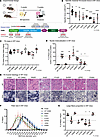
Centronuclear myopathies (CNMs) are rare congenital disorders characterized by muscle weakness, fiber hypotrophy, and organelle mislocalization. Most cases arise from mutations in MTM1 or DNM2, encoding myotubularin and dynamin-2, respectively. DNM2 is a GTPase that binds lipids, oligomerizes around membranes, and mediates fission. We previously showed that DNM2 levels are elevated in MTM1-CNM patients and Mtm1–/y mice, and that normalizing DNM2 rescues disease phenotypes. However, the specific DNM2 functions driving pathology remain unclear. Here, we expressed AAV-delivered WT and DNM2 mutants in WT and Mtm1–/y mouse muscles to disrupt specific DNM2 molecular functions. In WT mice, overexpression of WT DNM2 and most mutants induced CNM-like phenotypes, including reduced force, fiber hypotrophy, and centralized nuclei, consistent with gain-of-function mechanisms. The lipid-binding-defective mutant K562E did not induce disease-like phenotype. In Mtm1–/y mice, K562E mutant markedly improved muscle force, mass, and fiber size, while others failed to rescue. Therefore, we generated Mtm1–/y Dnm2K562E/+ mice, which showed full rescue of survival, motor function, and muscle force, with improved muscle mass, fiber size, and organelle positioning despite persistently elevated DNM2 levels. This study reveals that DNM2 lipid binding, not protein abundance or GTPase activity, drives pathology, and represents the most rational therapeutic target for DNM2 therapy in MTM1-CNM.
Authors
Raquel Gómez-Oca, Xènia Massana-Muñoz, David Reiss, Juliana De Carvalho Neves, Nadege Diedhiou, Roberto Silva-Rojas, Belinda S. Cowling, Marie Goret, Jocelyn Laporte
Abstract
Germline BRCA1/2 pathogenic variant (PV) carriers have elevated young-onset breast cancer risk. To define the pretreatment genomic landscapes of young-onset gBRCA-associated breast cancer, we evaluated 136 treatment-naïve tumors diagnosed before age 50 (92.6% ≤40): gBRCA1 86(63.2%); gBRCA2 50(36.8%) in the prospective POSH study, and 66 noncarriers from The Cancer Genome Atlas. Using whole exome sequencing, we analyzed somatic variation, allele-specific loss of heterozygosity (asLOH), homologous recombination deficiency (HRD), and single-base substitution signatures (SBS). gBRCA1(93%) and gBRCA2(96%) breast cancers had high rates of asLOH, but differed significantly in average HRD scores (57.4 ± 1.3 vs 43.7 ± 1.5, P < 0.0001) and median SBS composition (%): SBS1 (aging-associated) 12.9 vs 7.3, P = 0.013; SBS18 (reactive oxygen species [ROS]-associated) 1.4 vs 0, P = 0.007; and SBS3 (HRD-associated) 27.3 vs 42.6, P = 0.002. Compared to gBRCA2 tumors, gBRCA1 tumors with asLOH were significantly enriched for alterations in Hallmark ROS, DNA repair, and epithelial-mesenchymal transition pathways. In ER-positive, HER2-negative tumors from gBRCA1/2 carriers compared to noncarriers, we found significant enrichment of RB1 (OR:6.3;95%CI:2.8–15.4;padj = 0.001), TP53 (OR:4.6;95%CI:1.9–12.1;padj = 0.017), FAT1 (OR:3.9;95%CI:1.84–8.7;padj = 0.013), and MYC (OR:4.0;95%CI:1.8–9.1;padj = 0.017) SNV/indels/CNVs, associated with CDK4/6i resistance. Together, these findings demonstrate significant differences between gBRCA1 and gBRCA2-associated breast cancers, and preexisting CDK4/6i resistance mechanisms supporting prospective trials with individualized therapy for gBRCA1 vs gBRCA2 carriers, and comparing PARPi to CDK4/6i for ER-positive gBRCA1/2-associated breast cancer.
Authors
Mwangala P. Akamandisa, Mingyi Xia, Wilson Cheah, Bradley Wubbenhorst, Kurt P. D'Andrea, Mengyao Fan, Jake S. Shilan, Dana Pueschl, Anupma Nayak, Hayley McKenzie, William Tapper, Ellen R. Copson, Ramsey I. Cutress, Susan M. Domchek, Diana M. Eccles, Katherine L. Nathanson
No posts were found with this tag.


