
Inflammation
Abstract
Persistent production of type I interferons (IFN-Is) is a hallmark of cutaneous lupus erythematosus (CLE). Ultraviolet (UV) light stimulates IFN-I response in the skin and exacerbates CLE. Here, we identify V-type immunoglobulin domain-containing suppressor of T cell activation (VISTA) as a negative regulator of both basal and UV-induced IFN-I response in the skin and show that VISTA limits skin photosensitivity in an IFN-I-dependent manner, in part through Stimulator of Interferon Genes (STING). Furthermore, we demonstrate a novel role for VISTA in keratinocytes both at steady state and in response to UV light. Conditional deletion of VISTA in epidermal keratinocytes results in a ~10-fold increase in basal skin IFN-I scores and a heightened UV-induced skin injury score, both of which are dependent on IFN-I signaling. VISTA-targeting monoclonal antibodies suppress the UV-induced IFN-I response in human keratinocytes and in mice expressing human VISTA in vivo, thereby reducing UV-induced skin injury scores. Together, these findings identify VISTA as a keratinocyte-intrinsic checkpoint that restrains STING-associated IFN-I response in the skin and suggest VISTA agonism as a therapeutic strategy to limit photosensitivity in CLE.
Authors
Zachary T. Peters, Lindsay K. Mendyka, J'Voughnn A. Blake, Himanshu B. Goswami, Angelique N. Cortez, Grace E. Crossland, Sicong Shan, Elizabeth C. Nowak, Myana Keusch, Mrinal K. Sarkar, Johann E. Gudjonsson, Christopher M. Burns, Dorothea T. Barton, Bruce R. Blazar, Tyler J. Curiel, Rodwell Mabaera, Victoria P. Werth, Andrea Kalus, Keith B. Elkon, Randolph J. Noelle, Sladjana Skopelja-Gardner
Abstract
BACKGROUND. Long-COVID, or post-acute sequelae of COVID-19 (PASC), leads to debilitating physical and cognitive deficits. No PASC molecular signature present in patients with diverse symptoms has been described. While PASC engages pathways regulating pro-fibrotic programs, no comparison of PASC with fibrosis-associated epigenetic landscapes has been reported at the bulk or single-cell level. We hypothesize that a subset of DNA methylation changes are present in PASC patients from multiple cohorts, predominate in specific immune or inflammatory cell-types, and overlap with the epigenetic profile of patients at risk of pulmonary fibrosis. METHODS. Two distinct prospective cohorts, in 2021 and in 2022-24, involving 203 patients with PASC underwent bulk whole genome methylation sequencing (WGMS). Single-cell WGMS data was generated from an independent PASC cohort. Sixty-eight pre-pandemic patients with conditions elevating risk of pulmonary fibrosis development were compared with PASC. RESULTS. Sixteen differentially methylated regions distinguished PASC versus multiple independent, healthy controls. Single-cell analysis of these regions indicated trending relative hypermethylation at multiple cell types, with T4 lymphocytes eliciting hypermethylation at most of the sequences identified to be PASC-specific DMRs in the bulk analysis. Patients at risk of pulmonary fibrosis development elicited DNA methylation changes overlapping PASC. CONCLUSION. In two independent prospective cohorts, blood WGMS identifies differentially methylated regions associated with PASC. Hypermethylation of these regions is predominantly, although not exclusively, associated with T4 lymphocytes and overlap with changes present in pre-pandemic pulmonary fibrosis at-risk patients. FUNDING. National Institutes of Health award HL160661 (AJ); and AI173035 (AJ and RSA).
Authors
Andy Madrid, Joseph Balnis, Lisa A. Drake, Anupama Tiwari, Vraj J. Patel, Paul J. Feustel, Jihua Liu, Sündüz Keleş, Fangxiu Xu, Chris L. Wright, Alvaro G. Hernandez, Recai Yucel, Marc A. Judson, Harold A. Singer, Reid S. Alisch, Ariel Jaitovich
Abstract
Congenital and early-life Zika virus (ZIKV) infection can result in neurologic deficits. Precise mechanisms of injury, especially in the more subtle presentation of postnatal infection, are not fully elucidated. Here, we defined the effects of ZIKV on the developing brain using single cell transcriptomics, histopathology and design-based stereology, diffusion MRI, and neurobehavioral assessments in infant rhesus macaques. ZIKV upregulated interferon-stimulated genes in activated microglia and cell death pathways in neurons and downregulated metabolism and differentiation genes in mature oligodendrocytes. Abnormal micro-organization of the corpus collosum and limbic white matter tracts was seen on diffusion weighted imaging. A curated gene set associated with autism spectrum disorder risk was negatively enriched in inhibitory and excitatory neurons from ZIKV-infected infants, with increased emotional reactivity already evident two weeks following infection. From single cells to organism-level behaviors, these results define the pathways and processes disrupted by early-life ZIKV infection.
Authors
Venkata-Viswanadh Edara, Sienna Freeman, Maureen Sampson, Kathryn M. Moore, Rebecca Richardson, Nils Schoof, Divine Burgess, Michelle J. Lee, Gregory K. Tharp, Roza Vlasova, Shane Taylor, Ariana Hodjatzadeh, Yihana P. Melendez-Alejandro, Samia M. Abdallah, Esther W. Ndungu, Ava K. Mascarenhas, Chao-Hsiung Hsu, Tsang-Wei Tu, Martin Styner, Mehul S. Suthar, Mar M. Sanchez, Steven E. Bosinger, Mark W. Burke, Steven A. Sloan, Jessica Raper, Ann Chahroudi
Abstract
Ubiquitination is an important post-translational modification associated with essential cellular processes and implicated in regulation of immunity. Here we show that deletion of the E3 ubiquitin ligase Hectd3, germline or in hematopoietic compartment, including in CD11c+ cells, causes a more severe DSS-induced colitis and increased production of proinflammatory cytokines. Hectd3 mRNA levels were found reduced in colonic tissues of patients with ulcerative colitis (UC), which highlights a potential role for Hectd3 in regulating inflammatory responses in UC. We identified Myd88, a central adaptor in the TLR/IL1R signaling and inflammatory response, as a target for Hectd3 ubiquitination. We demonstrate that Hectd3 directly ubiquitinates Myd88 through K27-linked Poly-Ub chains in a nondegradative manner. Hectd3 KO GM-CSF-bone marrow derived cells treated with the TLR4 ligand lipopolysaccharide (LPS) produced more proinflammatory cytokines, show elevated phosphorylation of NF-κB and IRAK4, as well as elevated association of Myd88 with IRAK4, demonstrating that Hectd3 controls Myd88-IRAK4-NF-κB axis. Inhibition of Myd88 activity rescued colitis severity in the Hectd3 KO mice, including the elevated proinflammatory cytokine production. Thus, our results establish Myd88 as a new target for Hectd3 non-degradative polyubiquitination and restriction of immune colonic inflammation.
Authors
Shamima Islam, Shahnewaj Mannan, Ashley Zuniga, Upasana Parthasarathy, Valeriu B. Cismasiu, Leonardo Silvane, Sayan Chakraborty, Divya Priyanka Talada, Raghwendra Pratap Singh, Tomas Zelenka, Amreen Naveen, Sephra Chyanne Vickers, Michael G.M. Grant, Jonathan J. Cho, Theodore Drashansky, Alexander J. Kwiatkowski, Xintong Liu, Ross Tomaino, Olga A. Guryanova, Mariola J. Ferraro, Sang Yong Kim, Christian Jobin, Benjamin G. Keselowsky, Hongmin Li, Paulo C. Rodriguez, Martina Molgora, Amer A. Beg, Timothy I. Shaw, Zheng Ruan, Lixin Wan, Dorina Avram
Abstract
Severe SARS-CoV-2 infection is characterized by lung hyperinflammation, impaired IFN responses, and defective T cell activation, yet the molecular drivers of these immune dysregulations remain incompletely understood. Caspase-11 (CASP11), a key effector of the noncanonical inflammasome, has been shown to mediate an innate hyperinflammatory response and cytokine release in a mild SARS-CoV-2 infection model. However, the role played by CASP11 in severe SARS-CoV-2 disease and how it affects adaptive immunity has not been identified. Here, we found that CASP11 exacerbates severe SARS-CoV-2 pathogenesis by amplifying early innate immune responses while concurrently impairing antiviral CD8+ T cell immunity. Using global KO mice, hematopoietic BM chimeras, and Cx3cr1-expressing mononuclear phagocyte system cell–specific CASP11 deletion models, we show that targeting CASP11 reduces lung inflammation, promotes early NK cell–mediated IFN-γ production, and enhances robust virus-specific effector CD8+ T cell responses. This was associated with enhanced viral clearance and improved survival, even under lethal infection conditions. Importantly, CASP11-KO mice also exhibited faster resolution of postviral inflammation. These findings position CASP11 as a promising immunomodulatory target for acute and delayed manifestations of severe SARS-CoV-2 infection.
Authors
Mostafa M. Eltobgy, Mohamed M. Shamseldin, Owen D. Whitham, Heba M. Amer, Jeffrey R. Atkinson, Asmaa Badr, Jesse M. Hall, Gauruv Gupta, Yara Y. Hassan, Rabab El-Mergawy, Richard Perez, Sarah E. Faber, Maciej Pietrzak, Amy Webb, Xiaoli Zhang, Adam D. Kenney, Destiny Bissell, Jihad I. Omran, Shady Estfanous, Kylene P. Daily, Amir Yousif, Marisa R. Joldrichsen, Andrew McNamara, Mahesh KC, Mark E. Peeples, Emily A. Hemann, Hazem E. Ghoneim, Shahid M. Nimjee, Estelle Cormet-Boyaka, Jianrong Li, Prosper N. Boyaka, Jacob S. Yount, Benjamin M. Segal, Purnima Dubey, Amal O. Amer
Abstract
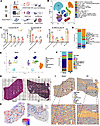
Surgical stress, such as liver ischemia/reperfusion (I/R) injury characterized by robust neutrophil infiltration and immune activation, induces sterile inflammation that reshapes tissue immunity and contributes to organ dysfunction, yet the intercellular circuits that spatially orchestrate these responses within the hepatic immune microenvironment remain incompletely defined. Here, we integrate single-cell RNA sequencing, spatial transcriptomics, high-dimensional spectral flow cytometry, and metabolomics to resolve the hepatic immune landscape following I/R at cellular and spatial resolution. While confirming extensive immune remodeling, we identify a dominant neutrophil–Kupffer cell communication axis mediated by neutrophil-derived thrombospondin-1 (TSP-1), which selectively engages CD36 on Kupffer cells. This interaction drives coordinated immune-metabolic reprogramming in Kupffer cells, characterized by suppression of oxidative phosphorylation, enhanced glycolysis, and remodeling of sphingolipid metabolism, including accumulation of hexosylceramides. Spatial analyses reveal preferential neutrophil–Kupffer cell colocalization within necrotic niches, and cross-species integration with human liver transplant datasets demonstrates conserved upregulation of the TSP-1/CD36 axis following reperfusion. Pharmacologic inhibition of TSP-1 attenuates liver injury and inflammatory responses in vivo. Together, these findings define a spatially organized, neutrophil-driven immune-metabolic circuit that governs functional reprogramming of Kupffer cells during surgical stress and identify the TSP-1/CD36 pathway as a conserved and targetable mediator of sterile liver injury.
Authors
Hongji Zhang, Xingping Huang, Preethi Jayakumar, Yunwei Zhang, Ti Yang, Xiaorong Guo, Grace Wu, Amrendra Kumar, Vijaya Bharti, Amblessed Onuma, Chengli Shen, Dequan Lou, Patricia S. Latham, James M. Crawford, Kong Chen, Anna E. Vilgelm, Lopa Mishra, Allan Tsung, Meihong Deng, Hai Huang
Abstract
Sex-specific mechanisms in chronic obstructive pulmonary disease (COPD) remain poorly defined. Sphingolipids are bioactive mediators that regulate airway epithelial integrity, inflammation, and bronchial smooth muscle tone, and their dysregulation contributes to airway hyperresponsiveness. We tested whether sphingolipid metabolism is regulated by sex in COPD. Lung tissue and paired plasma from female and male never-smoking controls (NSC), ever-smoking controls (SC), and COPD subjects were analyzed for sphingolipid enzyme expression and metabolite levels. Bronchial rings from mice and human bronchial smooth muscle cells (HBSMCs) were exposed to estradiol or cigarette smoke extract (CSE) ± ceramidase or sphingosine kinase inhibitors. Expression of sphingolipid regulators ASAH1 and ORMDL3 was increased in COPD airways, significantly higher in women, and correlated with airway smooth muscle remodeling. Plasma from females with COPD showed increased sphingosine-1-phosphate (S1P), whereas males exhibited higher ceramide levels. Female mice displayed greater CSE-induced bronchial reactivity, attenuated by sphingosine kinase inhibition. In male-donor HBSMCs, estradiol increased ASAH1, ORMDL3, S1P, and smooth muscle protein expression and enhanced contractility. CSE further augmented molecular responses in estradiol-treated cells but reduced collagen-gel contraction, whereas ceramidase inhibition attenuated estradiol-dependent effects. These findings suggest that estrogen-dependent alterations in sphingolipid metabolism contribute to airway hyperreactivity and remodeling in females with COPD.
Authors
Elisabetta Granato, Xiaoyun Wang, Yun Zhang, Joselyn Rojas-Quintero, Ida Cerqua, Scott A. Ochsner, Jeff Thomas Kue, Luca Cecchetto, Maor Sauler, Farrah Kheradmand, Joshua Malo, Fiorentina Roviezzo, Irina Petrache, Francesca Polverino
Abstract
Sterile tissue injury triggers a rapid neutrophil response that can be either pathogenic or protective, reflecting substantial functional heterogeneity of neutrophils; however, the neutrophil subsets underlying these divergent functions remain poorly defined. Here, using a well-established sterile corneal injury model, we delineate the time-dependent functional and transcriptional heterogeneity of neutrophils following sterile injury. Temporal neutrophil depletion revealed that neutrophils recruited at day 1, but not day 7, are essential for suppressing inflammation, promoting epithelial healing, and preserving nerve density. Single-cell RNA sequencing uncovered substantial transcriptional heterogeneity among circulating neutrophils and their rapid reprogramming within 24 hours after injury. Specifically, Il1r2 was highly enriched in these early injury-responsive neutrophils. Functional validation demonstrated that adoptive transfer of IL-1R2+ neutrophils markedly attenuated inflammation and accelerated epithelial and nerve repair, restoring tissue integrity, whereas IL-1R2- neutrophils exacerbated inflammatory responses. Together, these findings identify IL-1R2+ neutrophils as an early protective neutrophil subset expanded by sterile injury that restrains excessive inflammation and preserves tissue homeostasis, providing mechanistic insight into injury-induced neutrophil reprogramming and highlighting a potential therapeutic target for enhancing tissue repair.
Authors
Hyun Ju Lee, Jung Hwa Ko, Joo Youn Oh
Abstract
Both elevated plasma cell-free hemoglobin (CFH) and heparanase-driven endothelial glycocalyx shedding are contributors to microvascular dysfunction and organ injury in sepsis. However, the mechanisms governing heparanase activation, and the potential role of CFH in this process, are not understood. Utilizing patient samples, mice with cecal slurry-induced (CS) peritonitis and elevated CFH, and human lung microvascular endothelial cells (HLMVECs), we tested the hypothesis that CFH upregulates heparanase production to drive endothelial glycocalyx degradation. In human sepsis, elevated circulating CFH was associated with higher heparanase and heparan sulfate levels, which in turn correlated with adverse clinical outcomes. CS+CFH-treated mice had increased plasma heparanase, glycocalyx degradation, and pulmonary and systemic inflammation; endothelial heparanase deletion abrogated these effects. Additionally, in both pulmonary endothelial cells isolated from CS+CFH-treated mice and HLMVECs exposed to CFH and TNF, heparanase transcription and active enzyme production were increased. The deleterious effects of CFH were attenuated by acetaminophen, a hemoprotein reductant. In summary, we demonstrate that CFH oxidation stimulates endothelial heparanase expression and activation during sepsis, leading to endothelial glycocalyx degradation, which may disrupt the endothelial barrier and result in organ injury. Our findings highlight the CFH-heparanase axis as a potential therapeutic target for endothelial glycocalyx preservation in sepsis.
Authors
Avery M. Bogart, Anisa S. Haffizulla, Jason Lin, Nathan D. Putz, Han Noo Ri Lee, David M. Aslaner, Samantha K. Gonski, Nancy Wickersham, Kyle Riedmann, Jamie E. Meegan, Kaori Oshima, Ciara M. Shaver, Julie A. Bastarache, Eric P. Schmidt, Lorraine B. Ware
Abstract
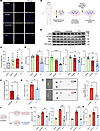
DNA damage and the cGAS/STING innate immunity pathway have been associated with fibrosis in systemic sclerosis (SSc), but a cause-and-effect role has not been established. Here we report the effects of TY1, a noncoding RNA drug of the exomer class that suppresses DNA damage and thereby inhibits cGAS/STING, in human SSc cells and in 2 preclinical models of SSc. Macrophages from patients with SSc exhibited high levels of phosphorylated DNA damage, cGAS, 2’3’-cGAMP, STING, and IFNs, all of which decreased after exposure to TY1. In mice that had been injected s.c. with bleomycin to model SSc, exercise tolerance, cardiac function, lung hydroxyproline, and skin thickness reverted to normal levels after oral administration of TY1. Similar therapeutic benefits were evident in the genetic tsk-1 mouse model of SSc. TY1 attenuated fibrosis and/or fibrotic gene expression in both mouse models of SSc and in human SSc skin fibroblasts. Our findings support the hypothesis that cGAS/STING, activated by DNA damage, is a key driver of fibrosis in SSc.
Authors
Xaviar M. Jones, Salwa Soussi, Alessandra Ciullo, Kara Tsi, Weixin Liu, Liang Li, Mario Fournier, Thassio Mesquita, Alberto M. Marchevsky, Nunzio Bottini, Francesco Boin, Ahmed G.E. Ibrahim, Eduardo Marbán
No posts were found with this tag.


