
Submit a comment
Abstract
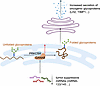
Non-small cell lung cancer (NSCLC) remains a leading cause of cancer-related mortality worldwide, yet its molecular drivers are not fully defined. Emerging evidence highlights the importance of tumor-stroma interactions mediated by secreted glycoproteins. However, the mechanisms by which cancer cells regulate the secretion of these protumorigenic proteins remain largely unknown. Endoplasmic reticulum–resident (ER-resident) N-glycan–processing enzymes regulate proper protein folding, a prerequisite for glycoproteins to exit the ER and undergo secretion. By evaluating their prognostic significance in lung tumors and conducting functional screening in lung cancer cells, we identify α-glucosidase II (α-Glc II) as a key regulator of NSCLC progression. α-Glc II promotes tumor growth and dissemination in a glucosidase activity–dependent manner in orthotopic mouse lung tumor model. Genetic disruption of α-Glc II induced ER stress and reduced cell proliferation and motility. Mechanistically, α-Glc II–mediated N-glycan modification regulated the ER-to-Golgi trafficking and secretion of specific oncogenic glycoproteins, including lysyl hydroxylase 2 (LH2), Tissue Inhibitor of Metalloproteinase 1 (TIMP1), and TGF-β, which are known to be associated with extracellular matrix remodeling. These findings uncover a role for ER glycosylation machinery in shaping the NSCLC secretome and highlight α-Glc II as a potential therapeutic target.
Authors
Shike Wang, Na Ding, Angelo Chen, Derrick Cardin, Yuting Xu, Kate Grimley, William K. Russell, Jun Xu, Jonathan M. Kurie, Guan-Yu Xiao, Xiaochao Tan
Guidelines
The Editorial Board will only consider comments that are deemed relevant and of interest to readers. The Journal will not post data that have not been subjected to peer review; or a comment that is essentially a reiteration of another comment.
- Comments appear on the Journal’s website and are linked from the original article’s web page.
- Authors are notified by email if their comments are posted.
- The Journal reserves the right to edit comments for length and clarity.
- No appeals will be considered.
- Comments are not indexed in PubMed.
Specific requirements
- Maximum length, 400 words
- Entered as plain text or HTML
- Author’s name and email address, to be posted with the comment
- Declaration of all potential conflicts of interest (even if these are not ultimately posted); see the Journal’s conflict-of-interest policy
- Comments may not include figures


