
Research ArticleImmunologyPulmonology
Open Access |  10.1172/jci.insight.202442
Aberrant mucin expression and keratinization distinguishing severe from mild asthma revealed by interpretable machine learning
Sagar L. Kale,1 Augusta Vincent,2 Mark A. Ross,3 Isha Mehta,2 Michael J. Calderon,3 Richard P. Ramonell,1 Himanshu Setya,4 Jessica C. McCreary-Partyka,1 Huijuan Yuan,1 Stephanie A. Christenson,5 Prescott G. Woodruff,5 Mario Castro,6 Kaharu Sumino,7 Nizar N. Jarjour,8 Loren C. Denlinger,8 Benjamin Gaston,9 Eugene R. Bleecker,10 Deborah A. Meyers,10 Wendy C. Moore,11 Elliot Israel,12 Bruce D. Levy,12 David Mauger,13 Serpil Erzurum,14 Anthony Newbrough,1 Taylor J. Nee,1 Prabir Ray,1,2 Claudette M. St. Croix,3 Sally E. Wenzel,1,2,15 Jishnu Das,2,16 Anuradha Ray,1,2 and Marc C. Gauthier1
1Division of Pulmonary, Allergy, Sleep, and Critical Care Medicine, Department of Medicine, and
2Department of Immunology, University of Pittsburgh School of Medicine, Pittsburgh, Pennsylvania, USA.
3Department of Cell Biology, University of Pittsburgh, Pittsburgh, Pennsylvania, USA.
4University of Pittsburgh School of Medicine, Pittsburgh, Pennsylvania, USA.
5Division of Pulmonary, Critical Care, Sleep and Allergy, Department of Medicine and Cardiovascular Research Institute, UCSF, San Francisco, California, USA.
6Division of Pulmonary, Critical Care and Sleep Medicine, University of Kansas School of Medicine, Kansas City, Kansas, USA.
7Division of Pulmonary and Critical Care Medicine, Washington University in St. Louis, St. Louis, Missouri, USA.
8Division of Allergy, Pulmonary and Critical Care Medicine, University of Wisconsin School of Medicine, Madison, Wisconsin, USA.
9Riley Hospital for Children and Indiana University School of Medicine, Indianapolis, Indiana, USA.
10Division of Genetics, Genomics and Precision Medicine, Department of Medicine, University of Arizona, Tucson, Arizona, USA.
11Section on Pulmonary, Critical Care, Allergy & Immunologic Diseases, Wake Forest School of Medicine, Winston-Salem, North Carolina, USA.
12Pulmonary and Critical Care Medicine Division, Department of Medicine, Brigham and Women’s Hospital and Harvard Medical School, Boston, Massachusetts, USA.
13Division of Statistics and Bioinformatics, Department of Public Health Sciences, Pennsylvania State University, University Park, Pennsylvania, USA.
14Lerner Research Institute, Respiratory Institute, Cleveland Clinic, Cleveland, Ohio, USA.
15Department of Environmental and Occupational Health, and
16Center for Systems Immunology, University of Pittsburgh, Pittsburgh, Pennsylvania, USA.
Address correspondence to: Marc C. Gauthier or Anuradha Ray, 3459 Fifth Ave, MUH NW628, Pittsburgh, Pennsylvania, 15213, USA. Phone: 412.692.2625; Email: gauthierm@upmc.edu (MCG). Phone: 412.802.3191; Email: raya@pitt.edu (AR). Or to: Jishnu Das, 5051 Center Ave., Pittsburgh, Pennsylvania, 15213, USA. Phone: 646.725.4894; Email: jishnu@pitt.edu.
Authorship note: JD, AR, and MCG contributed equally to this work.
Find articles by Kale, S. in: PubMed | Google Scholar
1Division of Pulmonary, Allergy, Sleep, and Critical Care Medicine, Department of Medicine, and
2Department of Immunology, University of Pittsburgh School of Medicine, Pittsburgh, Pennsylvania, USA.
3Department of Cell Biology, University of Pittsburgh, Pittsburgh, Pennsylvania, USA.
4University of Pittsburgh School of Medicine, Pittsburgh, Pennsylvania, USA.
5Division of Pulmonary, Critical Care, Sleep and Allergy, Department of Medicine and Cardiovascular Research Institute, UCSF, San Francisco, California, USA.
6Division of Pulmonary, Critical Care and Sleep Medicine, University of Kansas School of Medicine, Kansas City, Kansas, USA.
7Division of Pulmonary and Critical Care Medicine, Washington University in St. Louis, St. Louis, Missouri, USA.
8Division of Allergy, Pulmonary and Critical Care Medicine, University of Wisconsin School of Medicine, Madison, Wisconsin, USA.
9Riley Hospital for Children and Indiana University School of Medicine, Indianapolis, Indiana, USA.
10Division of Genetics, Genomics and Precision Medicine, Department of Medicine, University of Arizona, Tucson, Arizona, USA.
11Section on Pulmonary, Critical Care, Allergy & Immunologic Diseases, Wake Forest School of Medicine, Winston-Salem, North Carolina, USA.
12Pulmonary and Critical Care Medicine Division, Department of Medicine, Brigham and Women’s Hospital and Harvard Medical School, Boston, Massachusetts, USA.
13Division of Statistics and Bioinformatics, Department of Public Health Sciences, Pennsylvania State University, University Park, Pennsylvania, USA.
14Lerner Research Institute, Respiratory Institute, Cleveland Clinic, Cleveland, Ohio, USA.
15Department of Environmental and Occupational Health, and
16Center for Systems Immunology, University of Pittsburgh, Pittsburgh, Pennsylvania, USA.
Address correspondence to: Marc C. Gauthier or Anuradha Ray, 3459 Fifth Ave, MUH NW628, Pittsburgh, Pennsylvania, 15213, USA. Phone: 412.692.2625; Email: gauthierm@upmc.edu (MCG). Phone: 412.802.3191; Email: raya@pitt.edu (AR). Or to: Jishnu Das, 5051 Center Ave., Pittsburgh, Pennsylvania, 15213, USA. Phone: 646.725.4894; Email: jishnu@pitt.edu.
Authorship note: JD, AR, and MCG contributed equally to this work.
Find articles by Vincent, A. in: PubMed | Google Scholar
1Division of Pulmonary, Allergy, Sleep, and Critical Care Medicine, Department of Medicine, and
2Department of Immunology, University of Pittsburgh School of Medicine, Pittsburgh, Pennsylvania, USA.
3Department of Cell Biology, University of Pittsburgh, Pittsburgh, Pennsylvania, USA.
4University of Pittsburgh School of Medicine, Pittsburgh, Pennsylvania, USA.
5Division of Pulmonary, Critical Care, Sleep and Allergy, Department of Medicine and Cardiovascular Research Institute, UCSF, San Francisco, California, USA.
6Division of Pulmonary, Critical Care and Sleep Medicine, University of Kansas School of Medicine, Kansas City, Kansas, USA.
7Division of Pulmonary and Critical Care Medicine, Washington University in St. Louis, St. Louis, Missouri, USA.
8Division of Allergy, Pulmonary and Critical Care Medicine, University of Wisconsin School of Medicine, Madison, Wisconsin, USA.
9Riley Hospital for Children and Indiana University School of Medicine, Indianapolis, Indiana, USA.
10Division of Genetics, Genomics and Precision Medicine, Department of Medicine, University of Arizona, Tucson, Arizona, USA.
11Section on Pulmonary, Critical Care, Allergy & Immunologic Diseases, Wake Forest School of Medicine, Winston-Salem, North Carolina, USA.
12Pulmonary and Critical Care Medicine Division, Department of Medicine, Brigham and Women’s Hospital and Harvard Medical School, Boston, Massachusetts, USA.
13Division of Statistics and Bioinformatics, Department of Public Health Sciences, Pennsylvania State University, University Park, Pennsylvania, USA.
14Lerner Research Institute, Respiratory Institute, Cleveland Clinic, Cleveland, Ohio, USA.
15Department of Environmental and Occupational Health, and
16Center for Systems Immunology, University of Pittsburgh, Pittsburgh, Pennsylvania, USA.
Address correspondence to: Marc C. Gauthier or Anuradha Ray, 3459 Fifth Ave, MUH NW628, Pittsburgh, Pennsylvania, 15213, USA. Phone: 412.692.2625; Email: gauthierm@upmc.edu (MCG). Phone: 412.802.3191; Email: raya@pitt.edu (AR). Or to: Jishnu Das, 5051 Center Ave., Pittsburgh, Pennsylvania, 15213, USA. Phone: 646.725.4894; Email: jishnu@pitt.edu.
Authorship note: JD, AR, and MCG contributed equally to this work.
Find articles by Ross, M. in: PubMed | Google Scholar
1Division of Pulmonary, Allergy, Sleep, and Critical Care Medicine, Department of Medicine, and
2Department of Immunology, University of Pittsburgh School of Medicine, Pittsburgh, Pennsylvania, USA.
3Department of Cell Biology, University of Pittsburgh, Pittsburgh, Pennsylvania, USA.
4University of Pittsburgh School of Medicine, Pittsburgh, Pennsylvania, USA.
5Division of Pulmonary, Critical Care, Sleep and Allergy, Department of Medicine and Cardiovascular Research Institute, UCSF, San Francisco, California, USA.
6Division of Pulmonary, Critical Care and Sleep Medicine, University of Kansas School of Medicine, Kansas City, Kansas, USA.
7Division of Pulmonary and Critical Care Medicine, Washington University in St. Louis, St. Louis, Missouri, USA.
8Division of Allergy, Pulmonary and Critical Care Medicine, University of Wisconsin School of Medicine, Madison, Wisconsin, USA.
9Riley Hospital for Children and Indiana University School of Medicine, Indianapolis, Indiana, USA.
10Division of Genetics, Genomics and Precision Medicine, Department of Medicine, University of Arizona, Tucson, Arizona, USA.
11Section on Pulmonary, Critical Care, Allergy & Immunologic Diseases, Wake Forest School of Medicine, Winston-Salem, North Carolina, USA.
12Pulmonary and Critical Care Medicine Division, Department of Medicine, Brigham and Women’s Hospital and Harvard Medical School, Boston, Massachusetts, USA.
13Division of Statistics and Bioinformatics, Department of Public Health Sciences, Pennsylvania State University, University Park, Pennsylvania, USA.
14Lerner Research Institute, Respiratory Institute, Cleveland Clinic, Cleveland, Ohio, USA.
15Department of Environmental and Occupational Health, and
16Center for Systems Immunology, University of Pittsburgh, Pittsburgh, Pennsylvania, USA.
Address correspondence to: Marc C. Gauthier or Anuradha Ray, 3459 Fifth Ave, MUH NW628, Pittsburgh, Pennsylvania, 15213, USA. Phone: 412.692.2625; Email: gauthierm@upmc.edu (MCG). Phone: 412.802.3191; Email: raya@pitt.edu (AR). Or to: Jishnu Das, 5051 Center Ave., Pittsburgh, Pennsylvania, 15213, USA. Phone: 646.725.4894; Email: jishnu@pitt.edu.
Authorship note: JD, AR, and MCG contributed equally to this work.
Find articles by
Mehta, I.
in:
PubMed
|
Google Scholar
|

1Division of Pulmonary, Allergy, Sleep, and Critical Care Medicine, Department of Medicine, and
2Department of Immunology, University of Pittsburgh School of Medicine, Pittsburgh, Pennsylvania, USA.
3Department of Cell Biology, University of Pittsburgh, Pittsburgh, Pennsylvania, USA.
4University of Pittsburgh School of Medicine, Pittsburgh, Pennsylvania, USA.
5Division of Pulmonary, Critical Care, Sleep and Allergy, Department of Medicine and Cardiovascular Research Institute, UCSF, San Francisco, California, USA.
6Division of Pulmonary, Critical Care and Sleep Medicine, University of Kansas School of Medicine, Kansas City, Kansas, USA.
7Division of Pulmonary and Critical Care Medicine, Washington University in St. Louis, St. Louis, Missouri, USA.
8Division of Allergy, Pulmonary and Critical Care Medicine, University of Wisconsin School of Medicine, Madison, Wisconsin, USA.
9Riley Hospital for Children and Indiana University School of Medicine, Indianapolis, Indiana, USA.
10Division of Genetics, Genomics and Precision Medicine, Department of Medicine, University of Arizona, Tucson, Arizona, USA.
11Section on Pulmonary, Critical Care, Allergy & Immunologic Diseases, Wake Forest School of Medicine, Winston-Salem, North Carolina, USA.
12Pulmonary and Critical Care Medicine Division, Department of Medicine, Brigham and Women’s Hospital and Harvard Medical School, Boston, Massachusetts, USA.
13Division of Statistics and Bioinformatics, Department of Public Health Sciences, Pennsylvania State University, University Park, Pennsylvania, USA.
14Lerner Research Institute, Respiratory Institute, Cleveland Clinic, Cleveland, Ohio, USA.
15Department of Environmental and Occupational Health, and
16Center for Systems Immunology, University of Pittsburgh, Pittsburgh, Pennsylvania, USA.
Address correspondence to: Marc C. Gauthier or Anuradha Ray, 3459 Fifth Ave, MUH NW628, Pittsburgh, Pennsylvania, 15213, USA. Phone: 412.692.2625; Email: gauthierm@upmc.edu (MCG). Phone: 412.802.3191; Email: raya@pitt.edu (AR). Or to: Jishnu Das, 5051 Center Ave., Pittsburgh, Pennsylvania, 15213, USA. Phone: 646.725.4894; Email: jishnu@pitt.edu.
Authorship note: JD, AR, and MCG contributed equally to this work.
Find articles by Calderon, M. in: PubMed | Google Scholar
1Division of Pulmonary, Allergy, Sleep, and Critical Care Medicine, Department of Medicine, and
2Department of Immunology, University of Pittsburgh School of Medicine, Pittsburgh, Pennsylvania, USA.
3Department of Cell Biology, University of Pittsburgh, Pittsburgh, Pennsylvania, USA.
4University of Pittsburgh School of Medicine, Pittsburgh, Pennsylvania, USA.
5Division of Pulmonary, Critical Care, Sleep and Allergy, Department of Medicine and Cardiovascular Research Institute, UCSF, San Francisco, California, USA.
6Division of Pulmonary, Critical Care and Sleep Medicine, University of Kansas School of Medicine, Kansas City, Kansas, USA.
7Division of Pulmonary and Critical Care Medicine, Washington University in St. Louis, St. Louis, Missouri, USA.
8Division of Allergy, Pulmonary and Critical Care Medicine, University of Wisconsin School of Medicine, Madison, Wisconsin, USA.
9Riley Hospital for Children and Indiana University School of Medicine, Indianapolis, Indiana, USA.
10Division of Genetics, Genomics and Precision Medicine, Department of Medicine, University of Arizona, Tucson, Arizona, USA.
11Section on Pulmonary, Critical Care, Allergy & Immunologic Diseases, Wake Forest School of Medicine, Winston-Salem, North Carolina, USA.
12Pulmonary and Critical Care Medicine Division, Department of Medicine, Brigham and Women’s Hospital and Harvard Medical School, Boston, Massachusetts, USA.
13Division of Statistics and Bioinformatics, Department of Public Health Sciences, Pennsylvania State University, University Park, Pennsylvania, USA.
14Lerner Research Institute, Respiratory Institute, Cleveland Clinic, Cleveland, Ohio, USA.
15Department of Environmental and Occupational Health, and
16Center for Systems Immunology, University of Pittsburgh, Pittsburgh, Pennsylvania, USA.
Address correspondence to: Marc C. Gauthier or Anuradha Ray, 3459 Fifth Ave, MUH NW628, Pittsburgh, Pennsylvania, 15213, USA. Phone: 412.692.2625; Email: gauthierm@upmc.edu (MCG). Phone: 412.802.3191; Email: raya@pitt.edu (AR). Or to: Jishnu Das, 5051 Center Ave., Pittsburgh, Pennsylvania, 15213, USA. Phone: 646.725.4894; Email: jishnu@pitt.edu.
Authorship note: JD, AR, and MCG contributed equally to this work.
Find articles by Ramonell, R. in: PubMed | Google Scholar
1Division of Pulmonary, Allergy, Sleep, and Critical Care Medicine, Department of Medicine, and
2Department of Immunology, University of Pittsburgh School of Medicine, Pittsburgh, Pennsylvania, USA.
3Department of Cell Biology, University of Pittsburgh, Pittsburgh, Pennsylvania, USA.
4University of Pittsburgh School of Medicine, Pittsburgh, Pennsylvania, USA.
5Division of Pulmonary, Critical Care, Sleep and Allergy, Department of Medicine and Cardiovascular Research Institute, UCSF, San Francisco, California, USA.
6Division of Pulmonary, Critical Care and Sleep Medicine, University of Kansas School of Medicine, Kansas City, Kansas, USA.
7Division of Pulmonary and Critical Care Medicine, Washington University in St. Louis, St. Louis, Missouri, USA.
8Division of Allergy, Pulmonary and Critical Care Medicine, University of Wisconsin School of Medicine, Madison, Wisconsin, USA.
9Riley Hospital for Children and Indiana University School of Medicine, Indianapolis, Indiana, USA.
10Division of Genetics, Genomics and Precision Medicine, Department of Medicine, University of Arizona, Tucson, Arizona, USA.
11Section on Pulmonary, Critical Care, Allergy & Immunologic Diseases, Wake Forest School of Medicine, Winston-Salem, North Carolina, USA.
12Pulmonary and Critical Care Medicine Division, Department of Medicine, Brigham and Women’s Hospital and Harvard Medical School, Boston, Massachusetts, USA.
13Division of Statistics and Bioinformatics, Department of Public Health Sciences, Pennsylvania State University, University Park, Pennsylvania, USA.
14Lerner Research Institute, Respiratory Institute, Cleveland Clinic, Cleveland, Ohio, USA.
15Department of Environmental and Occupational Health, and
16Center for Systems Immunology, University of Pittsburgh, Pittsburgh, Pennsylvania, USA.
Address correspondence to: Marc C. Gauthier or Anuradha Ray, 3459 Fifth Ave, MUH NW628, Pittsburgh, Pennsylvania, 15213, USA. Phone: 412.692.2625; Email: gauthierm@upmc.edu (MCG). Phone: 412.802.3191; Email: raya@pitt.edu (AR). Or to: Jishnu Das, 5051 Center Ave., Pittsburgh, Pennsylvania, 15213, USA. Phone: 646.725.4894; Email: jishnu@pitt.edu.
Authorship note: JD, AR, and MCG contributed equally to this work.
Find articles by Setya, H. in: PubMed | Google Scholar
1Division of Pulmonary, Allergy, Sleep, and Critical Care Medicine, Department of Medicine, and
2Department of Immunology, University of Pittsburgh School of Medicine, Pittsburgh, Pennsylvania, USA.
3Department of Cell Biology, University of Pittsburgh, Pittsburgh, Pennsylvania, USA.
4University of Pittsburgh School of Medicine, Pittsburgh, Pennsylvania, USA.
5Division of Pulmonary, Critical Care, Sleep and Allergy, Department of Medicine and Cardiovascular Research Institute, UCSF, San Francisco, California, USA.
6Division of Pulmonary, Critical Care and Sleep Medicine, University of Kansas School of Medicine, Kansas City, Kansas, USA.
7Division of Pulmonary and Critical Care Medicine, Washington University in St. Louis, St. Louis, Missouri, USA.
8Division of Allergy, Pulmonary and Critical Care Medicine, University of Wisconsin School of Medicine, Madison, Wisconsin, USA.
9Riley Hospital for Children and Indiana University School of Medicine, Indianapolis, Indiana, USA.
10Division of Genetics, Genomics and Precision Medicine, Department of Medicine, University of Arizona, Tucson, Arizona, USA.
11Section on Pulmonary, Critical Care, Allergy & Immunologic Diseases, Wake Forest School of Medicine, Winston-Salem, North Carolina, USA.
12Pulmonary and Critical Care Medicine Division, Department of Medicine, Brigham and Women’s Hospital and Harvard Medical School, Boston, Massachusetts, USA.
13Division of Statistics and Bioinformatics, Department of Public Health Sciences, Pennsylvania State University, University Park, Pennsylvania, USA.
14Lerner Research Institute, Respiratory Institute, Cleveland Clinic, Cleveland, Ohio, USA.
15Department of Environmental and Occupational Health, and
16Center for Systems Immunology, University of Pittsburgh, Pittsburgh, Pennsylvania, USA.
Address correspondence to: Marc C. Gauthier or Anuradha Ray, 3459 Fifth Ave, MUH NW628, Pittsburgh, Pennsylvania, 15213, USA. Phone: 412.692.2625; Email: gauthierm@upmc.edu (MCG). Phone: 412.802.3191; Email: raya@pitt.edu (AR). Or to: Jishnu Das, 5051 Center Ave., Pittsburgh, Pennsylvania, 15213, USA. Phone: 646.725.4894; Email: jishnu@pitt.edu.
Authorship note: JD, AR, and MCG contributed equally to this work.
Find articles by McCreary-Partyka, J. in: PubMed | Google Scholar
1Division of Pulmonary, Allergy, Sleep, and Critical Care Medicine, Department of Medicine, and
2Department of Immunology, University of Pittsburgh School of Medicine, Pittsburgh, Pennsylvania, USA.
3Department of Cell Biology, University of Pittsburgh, Pittsburgh, Pennsylvania, USA.
4University of Pittsburgh School of Medicine, Pittsburgh, Pennsylvania, USA.
5Division of Pulmonary, Critical Care, Sleep and Allergy, Department of Medicine and Cardiovascular Research Institute, UCSF, San Francisco, California, USA.
6Division of Pulmonary, Critical Care and Sleep Medicine, University of Kansas School of Medicine, Kansas City, Kansas, USA.
7Division of Pulmonary and Critical Care Medicine, Washington University in St. Louis, St. Louis, Missouri, USA.
8Division of Allergy, Pulmonary and Critical Care Medicine, University of Wisconsin School of Medicine, Madison, Wisconsin, USA.
9Riley Hospital for Children and Indiana University School of Medicine, Indianapolis, Indiana, USA.
10Division of Genetics, Genomics and Precision Medicine, Department of Medicine, University of Arizona, Tucson, Arizona, USA.
11Section on Pulmonary, Critical Care, Allergy & Immunologic Diseases, Wake Forest School of Medicine, Winston-Salem, North Carolina, USA.
12Pulmonary and Critical Care Medicine Division, Department of Medicine, Brigham and Women’s Hospital and Harvard Medical School, Boston, Massachusetts, USA.
13Division of Statistics and Bioinformatics, Department of Public Health Sciences, Pennsylvania State University, University Park, Pennsylvania, USA.
14Lerner Research Institute, Respiratory Institute, Cleveland Clinic, Cleveland, Ohio, USA.
15Department of Environmental and Occupational Health, and
16Center for Systems Immunology, University of Pittsburgh, Pittsburgh, Pennsylvania, USA.
Address correspondence to: Marc C. Gauthier or Anuradha Ray, 3459 Fifth Ave, MUH NW628, Pittsburgh, Pennsylvania, 15213, USA. Phone: 412.692.2625; Email: gauthierm@upmc.edu (MCG). Phone: 412.802.3191; Email: raya@pitt.edu (AR). Or to: Jishnu Das, 5051 Center Ave., Pittsburgh, Pennsylvania, 15213, USA. Phone: 646.725.4894; Email: jishnu@pitt.edu.
Authorship note: JD, AR, and MCG contributed equally to this work.
Find articles by Yuan, H. in: PubMed | Google Scholar
1Division of Pulmonary, Allergy, Sleep, and Critical Care Medicine, Department of Medicine, and
2Department of Immunology, University of Pittsburgh School of Medicine, Pittsburgh, Pennsylvania, USA.
3Department of Cell Biology, University of Pittsburgh, Pittsburgh, Pennsylvania, USA.
4University of Pittsburgh School of Medicine, Pittsburgh, Pennsylvania, USA.
5Division of Pulmonary, Critical Care, Sleep and Allergy, Department of Medicine and Cardiovascular Research Institute, UCSF, San Francisco, California, USA.
6Division of Pulmonary, Critical Care and Sleep Medicine, University of Kansas School of Medicine, Kansas City, Kansas, USA.
7Division of Pulmonary and Critical Care Medicine, Washington University in St. Louis, St. Louis, Missouri, USA.
8Division of Allergy, Pulmonary and Critical Care Medicine, University of Wisconsin School of Medicine, Madison, Wisconsin, USA.
9Riley Hospital for Children and Indiana University School of Medicine, Indianapolis, Indiana, USA.
10Division of Genetics, Genomics and Precision Medicine, Department of Medicine, University of Arizona, Tucson, Arizona, USA.
11Section on Pulmonary, Critical Care, Allergy & Immunologic Diseases, Wake Forest School of Medicine, Winston-Salem, North Carolina, USA.
12Pulmonary and Critical Care Medicine Division, Department of Medicine, Brigham and Women’s Hospital and Harvard Medical School, Boston, Massachusetts, USA.
13Division of Statistics and Bioinformatics, Department of Public Health Sciences, Pennsylvania State University, University Park, Pennsylvania, USA.
14Lerner Research Institute, Respiratory Institute, Cleveland Clinic, Cleveland, Ohio, USA.
15Department of Environmental and Occupational Health, and
16Center for Systems Immunology, University of Pittsburgh, Pittsburgh, Pennsylvania, USA.
Address correspondence to: Marc C. Gauthier or Anuradha Ray, 3459 Fifth Ave, MUH NW628, Pittsburgh, Pennsylvania, 15213, USA. Phone: 412.692.2625; Email: gauthierm@upmc.edu (MCG). Phone: 412.802.3191; Email: raya@pitt.edu (AR). Or to: Jishnu Das, 5051 Center Ave., Pittsburgh, Pennsylvania, 15213, USA. Phone: 646.725.4894; Email: jishnu@pitt.edu.
Authorship note: JD, AR, and MCG contributed equally to this work.
Find articles by
Christenson, S.
in:
PubMed
|
Google Scholar
|
1Division of Pulmonary, Allergy, Sleep, and Critical Care Medicine, Department of Medicine, and
2Department of Immunology, University of Pittsburgh School of Medicine, Pittsburgh, Pennsylvania, USA.
3Department of Cell Biology, University of Pittsburgh, Pittsburgh, Pennsylvania, USA.
4University of Pittsburgh School of Medicine, Pittsburgh, Pennsylvania, USA.
5Division of Pulmonary, Critical Care, Sleep and Allergy, Department of Medicine and Cardiovascular Research Institute, UCSF, San Francisco, California, USA.
6Division of Pulmonary, Critical Care and Sleep Medicine, University of Kansas School of Medicine, Kansas City, Kansas, USA.
7Division of Pulmonary and Critical Care Medicine, Washington University in St. Louis, St. Louis, Missouri, USA.
8Division of Allergy, Pulmonary and Critical Care Medicine, University of Wisconsin School of Medicine, Madison, Wisconsin, USA.
9Riley Hospital for Children and Indiana University School of Medicine, Indianapolis, Indiana, USA.
10Division of Genetics, Genomics and Precision Medicine, Department of Medicine, University of Arizona, Tucson, Arizona, USA.
11Section on Pulmonary, Critical Care, Allergy & Immunologic Diseases, Wake Forest School of Medicine, Winston-Salem, North Carolina, USA.
12Pulmonary and Critical Care Medicine Division, Department of Medicine, Brigham and Women’s Hospital and Harvard Medical School, Boston, Massachusetts, USA.
13Division of Statistics and Bioinformatics, Department of Public Health Sciences, Pennsylvania State University, University Park, Pennsylvania, USA.
14Lerner Research Institute, Respiratory Institute, Cleveland Clinic, Cleveland, Ohio, USA.
15Department of Environmental and Occupational Health, and
16Center for Systems Immunology, University of Pittsburgh, Pittsburgh, Pennsylvania, USA.
Address correspondence to: Marc C. Gauthier or Anuradha Ray, 3459 Fifth Ave, MUH NW628, Pittsburgh, Pennsylvania, 15213, USA. Phone: 412.692.2625; Email: gauthierm@upmc.edu (MCG). Phone: 412.802.3191; Email: raya@pitt.edu (AR). Or to: Jishnu Das, 5051 Center Ave., Pittsburgh, Pennsylvania, 15213, USA. Phone: 646.725.4894; Email: jishnu@pitt.edu.
Authorship note: JD, AR, and MCG contributed equally to this work.
Find articles by
Woodruff, P.
in:
PubMed
|
Google Scholar
|
1Division of Pulmonary, Allergy, Sleep, and Critical Care Medicine, Department of Medicine, and
2Department of Immunology, University of Pittsburgh School of Medicine, Pittsburgh, Pennsylvania, USA.
3Department of Cell Biology, University of Pittsburgh, Pittsburgh, Pennsylvania, USA.
4University of Pittsburgh School of Medicine, Pittsburgh, Pennsylvania, USA.
5Division of Pulmonary, Critical Care, Sleep and Allergy, Department of Medicine and Cardiovascular Research Institute, UCSF, San Francisco, California, USA.
6Division of Pulmonary, Critical Care and Sleep Medicine, University of Kansas School of Medicine, Kansas City, Kansas, USA.
7Division of Pulmonary and Critical Care Medicine, Washington University in St. Louis, St. Louis, Missouri, USA.
8Division of Allergy, Pulmonary and Critical Care Medicine, University of Wisconsin School of Medicine, Madison, Wisconsin, USA.
9Riley Hospital for Children and Indiana University School of Medicine, Indianapolis, Indiana, USA.
10Division of Genetics, Genomics and Precision Medicine, Department of Medicine, University of Arizona, Tucson, Arizona, USA.
11Section on Pulmonary, Critical Care, Allergy & Immunologic Diseases, Wake Forest School of Medicine, Winston-Salem, North Carolina, USA.
12Pulmonary and Critical Care Medicine Division, Department of Medicine, Brigham and Women’s Hospital and Harvard Medical School, Boston, Massachusetts, USA.
13Division of Statistics and Bioinformatics, Department of Public Health Sciences, Pennsylvania State University, University Park, Pennsylvania, USA.
14Lerner Research Institute, Respiratory Institute, Cleveland Clinic, Cleveland, Ohio, USA.
15Department of Environmental and Occupational Health, and
16Center for Systems Immunology, University of Pittsburgh, Pittsburgh, Pennsylvania, USA.
Address correspondence to: Marc C. Gauthier or Anuradha Ray, 3459 Fifth Ave, MUH NW628, Pittsburgh, Pennsylvania, 15213, USA. Phone: 412.692.2625; Email: gauthierm@upmc.edu (MCG). Phone: 412.802.3191; Email: raya@pitt.edu (AR). Or to: Jishnu Das, 5051 Center Ave., Pittsburgh, Pennsylvania, 15213, USA. Phone: 646.725.4894; Email: jishnu@pitt.edu.
Authorship note: JD, AR, and MCG contributed equally to this work.
Find articles by Castro, M. in: PubMed | Google Scholar
1Division of Pulmonary, Allergy, Sleep, and Critical Care Medicine, Department of Medicine, and
2Department of Immunology, University of Pittsburgh School of Medicine, Pittsburgh, Pennsylvania, USA.
3Department of Cell Biology, University of Pittsburgh, Pittsburgh, Pennsylvania, USA.
4University of Pittsburgh School of Medicine, Pittsburgh, Pennsylvania, USA.
5Division of Pulmonary, Critical Care, Sleep and Allergy, Department of Medicine and Cardiovascular Research Institute, UCSF, San Francisco, California, USA.
6Division of Pulmonary, Critical Care and Sleep Medicine, University of Kansas School of Medicine, Kansas City, Kansas, USA.
7Division of Pulmonary and Critical Care Medicine, Washington University in St. Louis, St. Louis, Missouri, USA.
8Division of Allergy, Pulmonary and Critical Care Medicine, University of Wisconsin School of Medicine, Madison, Wisconsin, USA.
9Riley Hospital for Children and Indiana University School of Medicine, Indianapolis, Indiana, USA.
10Division of Genetics, Genomics and Precision Medicine, Department of Medicine, University of Arizona, Tucson, Arizona, USA.
11Section on Pulmonary, Critical Care, Allergy & Immunologic Diseases, Wake Forest School of Medicine, Winston-Salem, North Carolina, USA.
12Pulmonary and Critical Care Medicine Division, Department of Medicine, Brigham and Women’s Hospital and Harvard Medical School, Boston, Massachusetts, USA.
13Division of Statistics and Bioinformatics, Department of Public Health Sciences, Pennsylvania State University, University Park, Pennsylvania, USA.
14Lerner Research Institute, Respiratory Institute, Cleveland Clinic, Cleveland, Ohio, USA.
15Department of Environmental and Occupational Health, and
16Center for Systems Immunology, University of Pittsburgh, Pittsburgh, Pennsylvania, USA.
Address correspondence to: Marc C. Gauthier or Anuradha Ray, 3459 Fifth Ave, MUH NW628, Pittsburgh, Pennsylvania, 15213, USA. Phone: 412.692.2625; Email: gauthierm@upmc.edu (MCG). Phone: 412.802.3191; Email: raya@pitt.edu (AR). Or to: Jishnu Das, 5051 Center Ave., Pittsburgh, Pennsylvania, 15213, USA. Phone: 646.725.4894; Email: jishnu@pitt.edu.
Authorship note: JD, AR, and MCG contributed equally to this work.
Find articles by Sumino, K. in: PubMed | Google Scholar
1Division of Pulmonary, Allergy, Sleep, and Critical Care Medicine, Department of Medicine, and
2Department of Immunology, University of Pittsburgh School of Medicine, Pittsburgh, Pennsylvania, USA.
3Department of Cell Biology, University of Pittsburgh, Pittsburgh, Pennsylvania, USA.
4University of Pittsburgh School of Medicine, Pittsburgh, Pennsylvania, USA.
5Division of Pulmonary, Critical Care, Sleep and Allergy, Department of Medicine and Cardiovascular Research Institute, UCSF, San Francisco, California, USA.
6Division of Pulmonary, Critical Care and Sleep Medicine, University of Kansas School of Medicine, Kansas City, Kansas, USA.
7Division of Pulmonary and Critical Care Medicine, Washington University in St. Louis, St. Louis, Missouri, USA.
8Division of Allergy, Pulmonary and Critical Care Medicine, University of Wisconsin School of Medicine, Madison, Wisconsin, USA.
9Riley Hospital for Children and Indiana University School of Medicine, Indianapolis, Indiana, USA.
10Division of Genetics, Genomics and Precision Medicine, Department of Medicine, University of Arizona, Tucson, Arizona, USA.
11Section on Pulmonary, Critical Care, Allergy & Immunologic Diseases, Wake Forest School of Medicine, Winston-Salem, North Carolina, USA.
12Pulmonary and Critical Care Medicine Division, Department of Medicine, Brigham and Women’s Hospital and Harvard Medical School, Boston, Massachusetts, USA.
13Division of Statistics and Bioinformatics, Department of Public Health Sciences, Pennsylvania State University, University Park, Pennsylvania, USA.
14Lerner Research Institute, Respiratory Institute, Cleveland Clinic, Cleveland, Ohio, USA.
15Department of Environmental and Occupational Health, and
16Center for Systems Immunology, University of Pittsburgh, Pittsburgh, Pennsylvania, USA.
Address correspondence to: Marc C. Gauthier or Anuradha Ray, 3459 Fifth Ave, MUH NW628, Pittsburgh, Pennsylvania, 15213, USA. Phone: 412.692.2625; Email: gauthierm@upmc.edu (MCG). Phone: 412.802.3191; Email: raya@pitt.edu (AR). Or to: Jishnu Das, 5051 Center Ave., Pittsburgh, Pennsylvania, 15213, USA. Phone: 646.725.4894; Email: jishnu@pitt.edu.
Authorship note: JD, AR, and MCG contributed equally to this work.
Find articles by Jarjour, N. in: PubMed | Google Scholar
1Division of Pulmonary, Allergy, Sleep, and Critical Care Medicine, Department of Medicine, and
2Department of Immunology, University of Pittsburgh School of Medicine, Pittsburgh, Pennsylvania, USA.
3Department of Cell Biology, University of Pittsburgh, Pittsburgh, Pennsylvania, USA.
4University of Pittsburgh School of Medicine, Pittsburgh, Pennsylvania, USA.
5Division of Pulmonary, Critical Care, Sleep and Allergy, Department of Medicine and Cardiovascular Research Institute, UCSF, San Francisco, California, USA.
6Division of Pulmonary, Critical Care and Sleep Medicine, University of Kansas School of Medicine, Kansas City, Kansas, USA.
7Division of Pulmonary and Critical Care Medicine, Washington University in St. Louis, St. Louis, Missouri, USA.
8Division of Allergy, Pulmonary and Critical Care Medicine, University of Wisconsin School of Medicine, Madison, Wisconsin, USA.
9Riley Hospital for Children and Indiana University School of Medicine, Indianapolis, Indiana, USA.
10Division of Genetics, Genomics and Precision Medicine, Department of Medicine, University of Arizona, Tucson, Arizona, USA.
11Section on Pulmonary, Critical Care, Allergy & Immunologic Diseases, Wake Forest School of Medicine, Winston-Salem, North Carolina, USA.
12Pulmonary and Critical Care Medicine Division, Department of Medicine, Brigham and Women’s Hospital and Harvard Medical School, Boston, Massachusetts, USA.
13Division of Statistics and Bioinformatics, Department of Public Health Sciences, Pennsylvania State University, University Park, Pennsylvania, USA.
14Lerner Research Institute, Respiratory Institute, Cleveland Clinic, Cleveland, Ohio, USA.
15Department of Environmental and Occupational Health, and
16Center for Systems Immunology, University of Pittsburgh, Pittsburgh, Pennsylvania, USA.
Address correspondence to: Marc C. Gauthier or Anuradha Ray, 3459 Fifth Ave, MUH NW628, Pittsburgh, Pennsylvania, 15213, USA. Phone: 412.692.2625; Email: gauthierm@upmc.edu (MCG). Phone: 412.802.3191; Email: raya@pitt.edu (AR). Or to: Jishnu Das, 5051 Center Ave., Pittsburgh, Pennsylvania, 15213, USA. Phone: 646.725.4894; Email: jishnu@pitt.edu.
Authorship note: JD, AR, and MCG contributed equally to this work.
Find articles by Denlinger, L. in: PubMed | Google Scholar
1Division of Pulmonary, Allergy, Sleep, and Critical Care Medicine, Department of Medicine, and
2Department of Immunology, University of Pittsburgh School of Medicine, Pittsburgh, Pennsylvania, USA.
3Department of Cell Biology, University of Pittsburgh, Pittsburgh, Pennsylvania, USA.
4University of Pittsburgh School of Medicine, Pittsburgh, Pennsylvania, USA.
5Division of Pulmonary, Critical Care, Sleep and Allergy, Department of Medicine and Cardiovascular Research Institute, UCSF, San Francisco, California, USA.
6Division of Pulmonary, Critical Care and Sleep Medicine, University of Kansas School of Medicine, Kansas City, Kansas, USA.
7Division of Pulmonary and Critical Care Medicine, Washington University in St. Louis, St. Louis, Missouri, USA.
8Division of Allergy, Pulmonary and Critical Care Medicine, University of Wisconsin School of Medicine, Madison, Wisconsin, USA.
9Riley Hospital for Children and Indiana University School of Medicine, Indianapolis, Indiana, USA.
10Division of Genetics, Genomics and Precision Medicine, Department of Medicine, University of Arizona, Tucson, Arizona, USA.
11Section on Pulmonary, Critical Care, Allergy & Immunologic Diseases, Wake Forest School of Medicine, Winston-Salem, North Carolina, USA.
12Pulmonary and Critical Care Medicine Division, Department of Medicine, Brigham and Women’s Hospital and Harvard Medical School, Boston, Massachusetts, USA.
13Division of Statistics and Bioinformatics, Department of Public Health Sciences, Pennsylvania State University, University Park, Pennsylvania, USA.
14Lerner Research Institute, Respiratory Institute, Cleveland Clinic, Cleveland, Ohio, USA.
15Department of Environmental and Occupational Health, and
16Center for Systems Immunology, University of Pittsburgh, Pittsburgh, Pennsylvania, USA.
Address correspondence to: Marc C. Gauthier or Anuradha Ray, 3459 Fifth Ave, MUH NW628, Pittsburgh, Pennsylvania, 15213, USA. Phone: 412.692.2625; Email: gauthierm@upmc.edu (MCG). Phone: 412.802.3191; Email: raya@pitt.edu (AR). Or to: Jishnu Das, 5051 Center Ave., Pittsburgh, Pennsylvania, 15213, USA. Phone: 646.725.4894; Email: jishnu@pitt.edu.
Authorship note: JD, AR, and MCG contributed equally to this work.
Find articles by Gaston, B. in: PubMed | Google Scholar
1Division of Pulmonary, Allergy, Sleep, and Critical Care Medicine, Department of Medicine, and
2Department of Immunology, University of Pittsburgh School of Medicine, Pittsburgh, Pennsylvania, USA.
3Department of Cell Biology, University of Pittsburgh, Pittsburgh, Pennsylvania, USA.
4University of Pittsburgh School of Medicine, Pittsburgh, Pennsylvania, USA.
5Division of Pulmonary, Critical Care, Sleep and Allergy, Department of Medicine and Cardiovascular Research Institute, UCSF, San Francisco, California, USA.
6Division of Pulmonary, Critical Care and Sleep Medicine, University of Kansas School of Medicine, Kansas City, Kansas, USA.
7Division of Pulmonary and Critical Care Medicine, Washington University in St. Louis, St. Louis, Missouri, USA.
8Division of Allergy, Pulmonary and Critical Care Medicine, University of Wisconsin School of Medicine, Madison, Wisconsin, USA.
9Riley Hospital for Children and Indiana University School of Medicine, Indianapolis, Indiana, USA.
10Division of Genetics, Genomics and Precision Medicine, Department of Medicine, University of Arizona, Tucson, Arizona, USA.
11Section on Pulmonary, Critical Care, Allergy & Immunologic Diseases, Wake Forest School of Medicine, Winston-Salem, North Carolina, USA.
12Pulmonary and Critical Care Medicine Division, Department of Medicine, Brigham and Women’s Hospital and Harvard Medical School, Boston, Massachusetts, USA.
13Division of Statistics and Bioinformatics, Department of Public Health Sciences, Pennsylvania State University, University Park, Pennsylvania, USA.
14Lerner Research Institute, Respiratory Institute, Cleveland Clinic, Cleveland, Ohio, USA.
15Department of Environmental and Occupational Health, and
16Center for Systems Immunology, University of Pittsburgh, Pittsburgh, Pennsylvania, USA.
Address correspondence to: Marc C. Gauthier or Anuradha Ray, 3459 Fifth Ave, MUH NW628, Pittsburgh, Pennsylvania, 15213, USA. Phone: 412.692.2625; Email: gauthierm@upmc.edu (MCG). Phone: 412.802.3191; Email: raya@pitt.edu (AR). Or to: Jishnu Das, 5051 Center Ave., Pittsburgh, Pennsylvania, 15213, USA. Phone: 646.725.4894; Email: jishnu@pitt.edu.
Authorship note: JD, AR, and MCG contributed equally to this work.
Find articles by Bleecker, E. in: PubMed | Google Scholar
1Division of Pulmonary, Allergy, Sleep, and Critical Care Medicine, Department of Medicine, and
2Department of Immunology, University of Pittsburgh School of Medicine, Pittsburgh, Pennsylvania, USA.
3Department of Cell Biology, University of Pittsburgh, Pittsburgh, Pennsylvania, USA.
4University of Pittsburgh School of Medicine, Pittsburgh, Pennsylvania, USA.
5Division of Pulmonary, Critical Care, Sleep and Allergy, Department of Medicine and Cardiovascular Research Institute, UCSF, San Francisco, California, USA.
6Division of Pulmonary, Critical Care and Sleep Medicine, University of Kansas School of Medicine, Kansas City, Kansas, USA.
7Division of Pulmonary and Critical Care Medicine, Washington University in St. Louis, St. Louis, Missouri, USA.
8Division of Allergy, Pulmonary and Critical Care Medicine, University of Wisconsin School of Medicine, Madison, Wisconsin, USA.
9Riley Hospital for Children and Indiana University School of Medicine, Indianapolis, Indiana, USA.
10Division of Genetics, Genomics and Precision Medicine, Department of Medicine, University of Arizona, Tucson, Arizona, USA.
11Section on Pulmonary, Critical Care, Allergy & Immunologic Diseases, Wake Forest School of Medicine, Winston-Salem, North Carolina, USA.
12Pulmonary and Critical Care Medicine Division, Department of Medicine, Brigham and Women’s Hospital and Harvard Medical School, Boston, Massachusetts, USA.
13Division of Statistics and Bioinformatics, Department of Public Health Sciences, Pennsylvania State University, University Park, Pennsylvania, USA.
14Lerner Research Institute, Respiratory Institute, Cleveland Clinic, Cleveland, Ohio, USA.
15Department of Environmental and Occupational Health, and
16Center for Systems Immunology, University of Pittsburgh, Pittsburgh, Pennsylvania, USA.
Address correspondence to: Marc C. Gauthier or Anuradha Ray, 3459 Fifth Ave, MUH NW628, Pittsburgh, Pennsylvania, 15213, USA. Phone: 412.692.2625; Email: gauthierm@upmc.edu (MCG). Phone: 412.802.3191; Email: raya@pitt.edu (AR). Or to: Jishnu Das, 5051 Center Ave., Pittsburgh, Pennsylvania, 15213, USA. Phone: 646.725.4894; Email: jishnu@pitt.edu.
Authorship note: JD, AR, and MCG contributed equally to this work.
Find articles by Meyers, D. in: PubMed | Google Scholar
1Division of Pulmonary, Allergy, Sleep, and Critical Care Medicine, Department of Medicine, and
2Department of Immunology, University of Pittsburgh School of Medicine, Pittsburgh, Pennsylvania, USA.
3Department of Cell Biology, University of Pittsburgh, Pittsburgh, Pennsylvania, USA.
4University of Pittsburgh School of Medicine, Pittsburgh, Pennsylvania, USA.
5Division of Pulmonary, Critical Care, Sleep and Allergy, Department of Medicine and Cardiovascular Research Institute, UCSF, San Francisco, California, USA.
6Division of Pulmonary, Critical Care and Sleep Medicine, University of Kansas School of Medicine, Kansas City, Kansas, USA.
7Division of Pulmonary and Critical Care Medicine, Washington University in St. Louis, St. Louis, Missouri, USA.
8Division of Allergy, Pulmonary and Critical Care Medicine, University of Wisconsin School of Medicine, Madison, Wisconsin, USA.
9Riley Hospital for Children and Indiana University School of Medicine, Indianapolis, Indiana, USA.
10Division of Genetics, Genomics and Precision Medicine, Department of Medicine, University of Arizona, Tucson, Arizona, USA.
11Section on Pulmonary, Critical Care, Allergy & Immunologic Diseases, Wake Forest School of Medicine, Winston-Salem, North Carolina, USA.
12Pulmonary and Critical Care Medicine Division, Department of Medicine, Brigham and Women’s Hospital and Harvard Medical School, Boston, Massachusetts, USA.
13Division of Statistics and Bioinformatics, Department of Public Health Sciences, Pennsylvania State University, University Park, Pennsylvania, USA.
14Lerner Research Institute, Respiratory Institute, Cleveland Clinic, Cleveland, Ohio, USA.
15Department of Environmental and Occupational Health, and
16Center for Systems Immunology, University of Pittsburgh, Pittsburgh, Pennsylvania, USA.
Address correspondence to: Marc C. Gauthier or Anuradha Ray, 3459 Fifth Ave, MUH NW628, Pittsburgh, Pennsylvania, 15213, USA. Phone: 412.692.2625; Email: gauthierm@upmc.edu (MCG). Phone: 412.802.3191; Email: raya@pitt.edu (AR). Or to: Jishnu Das, 5051 Center Ave., Pittsburgh, Pennsylvania, 15213, USA. Phone: 646.725.4894; Email: jishnu@pitt.edu.
Authorship note: JD, AR, and MCG contributed equally to this work.
Find articles by Moore, W. in: PubMed | Google Scholar
1Division of Pulmonary, Allergy, Sleep, and Critical Care Medicine, Department of Medicine, and
2Department of Immunology, University of Pittsburgh School of Medicine, Pittsburgh, Pennsylvania, USA.
3Department of Cell Biology, University of Pittsburgh, Pittsburgh, Pennsylvania, USA.
4University of Pittsburgh School of Medicine, Pittsburgh, Pennsylvania, USA.
5Division of Pulmonary, Critical Care, Sleep and Allergy, Department of Medicine and Cardiovascular Research Institute, UCSF, San Francisco, California, USA.
6Division of Pulmonary, Critical Care and Sleep Medicine, University of Kansas School of Medicine, Kansas City, Kansas, USA.
7Division of Pulmonary and Critical Care Medicine, Washington University in St. Louis, St. Louis, Missouri, USA.
8Division of Allergy, Pulmonary and Critical Care Medicine, University of Wisconsin School of Medicine, Madison, Wisconsin, USA.
9Riley Hospital for Children and Indiana University School of Medicine, Indianapolis, Indiana, USA.
10Division of Genetics, Genomics and Precision Medicine, Department of Medicine, University of Arizona, Tucson, Arizona, USA.
11Section on Pulmonary, Critical Care, Allergy & Immunologic Diseases, Wake Forest School of Medicine, Winston-Salem, North Carolina, USA.
12Pulmonary and Critical Care Medicine Division, Department of Medicine, Brigham and Women’s Hospital and Harvard Medical School, Boston, Massachusetts, USA.
13Division of Statistics and Bioinformatics, Department of Public Health Sciences, Pennsylvania State University, University Park, Pennsylvania, USA.
14Lerner Research Institute, Respiratory Institute, Cleveland Clinic, Cleveland, Ohio, USA.
15Department of Environmental and Occupational Health, and
16Center for Systems Immunology, University of Pittsburgh, Pittsburgh, Pennsylvania, USA.
Address correspondence to: Marc C. Gauthier or Anuradha Ray, 3459 Fifth Ave, MUH NW628, Pittsburgh, Pennsylvania, 15213, USA. Phone: 412.692.2625; Email: gauthierm@upmc.edu (MCG). Phone: 412.802.3191; Email: raya@pitt.edu (AR). Or to: Jishnu Das, 5051 Center Ave., Pittsburgh, Pennsylvania, 15213, USA. Phone: 646.725.4894; Email: jishnu@pitt.edu.
Authorship note: JD, AR, and MCG contributed equally to this work.
Find articles by Israel, E. in: PubMed | Google Scholar
1Division of Pulmonary, Allergy, Sleep, and Critical Care Medicine, Department of Medicine, and
2Department of Immunology, University of Pittsburgh School of Medicine, Pittsburgh, Pennsylvania, USA.
3Department of Cell Biology, University of Pittsburgh, Pittsburgh, Pennsylvania, USA.
4University of Pittsburgh School of Medicine, Pittsburgh, Pennsylvania, USA.
5Division of Pulmonary, Critical Care, Sleep and Allergy, Department of Medicine and Cardiovascular Research Institute, UCSF, San Francisco, California, USA.
6Division of Pulmonary, Critical Care and Sleep Medicine, University of Kansas School of Medicine, Kansas City, Kansas, USA.
7Division of Pulmonary and Critical Care Medicine, Washington University in St. Louis, St. Louis, Missouri, USA.
8Division of Allergy, Pulmonary and Critical Care Medicine, University of Wisconsin School of Medicine, Madison, Wisconsin, USA.
9Riley Hospital for Children and Indiana University School of Medicine, Indianapolis, Indiana, USA.
10Division of Genetics, Genomics and Precision Medicine, Department of Medicine, University of Arizona, Tucson, Arizona, USA.
11Section on Pulmonary, Critical Care, Allergy & Immunologic Diseases, Wake Forest School of Medicine, Winston-Salem, North Carolina, USA.
12Pulmonary and Critical Care Medicine Division, Department of Medicine, Brigham and Women’s Hospital and Harvard Medical School, Boston, Massachusetts, USA.
13Division of Statistics and Bioinformatics, Department of Public Health Sciences, Pennsylvania State University, University Park, Pennsylvania, USA.
14Lerner Research Institute, Respiratory Institute, Cleveland Clinic, Cleveland, Ohio, USA.
15Department of Environmental and Occupational Health, and
16Center for Systems Immunology, University of Pittsburgh, Pittsburgh, Pennsylvania, USA.
Address correspondence to: Marc C. Gauthier or Anuradha Ray, 3459 Fifth Ave, MUH NW628, Pittsburgh, Pennsylvania, 15213, USA. Phone: 412.692.2625; Email: gauthierm@upmc.edu (MCG). Phone: 412.802.3191; Email: raya@pitt.edu (AR). Or to: Jishnu Das, 5051 Center Ave., Pittsburgh, Pennsylvania, 15213, USA. Phone: 646.725.4894; Email: jishnu@pitt.edu.
Authorship note: JD, AR, and MCG contributed equally to this work.
Find articles by
Levy, B.
in:
PubMed
|
Google Scholar
|
1Division of Pulmonary, Allergy, Sleep, and Critical Care Medicine, Department of Medicine, and
2Department of Immunology, University of Pittsburgh School of Medicine, Pittsburgh, Pennsylvania, USA.
3Department of Cell Biology, University of Pittsburgh, Pittsburgh, Pennsylvania, USA.
4University of Pittsburgh School of Medicine, Pittsburgh, Pennsylvania, USA.
5Division of Pulmonary, Critical Care, Sleep and Allergy, Department of Medicine and Cardiovascular Research Institute, UCSF, San Francisco, California, USA.
6Division of Pulmonary, Critical Care and Sleep Medicine, University of Kansas School of Medicine, Kansas City, Kansas, USA.
7Division of Pulmonary and Critical Care Medicine, Washington University in St. Louis, St. Louis, Missouri, USA.
8Division of Allergy, Pulmonary and Critical Care Medicine, University of Wisconsin School of Medicine, Madison, Wisconsin, USA.
9Riley Hospital for Children and Indiana University School of Medicine, Indianapolis, Indiana, USA.
10Division of Genetics, Genomics and Precision Medicine, Department of Medicine, University of Arizona, Tucson, Arizona, USA.
11Section on Pulmonary, Critical Care, Allergy & Immunologic Diseases, Wake Forest School of Medicine, Winston-Salem, North Carolina, USA.
12Pulmonary and Critical Care Medicine Division, Department of Medicine, Brigham and Women’s Hospital and Harvard Medical School, Boston, Massachusetts, USA.
13Division of Statistics and Bioinformatics, Department of Public Health Sciences, Pennsylvania State University, University Park, Pennsylvania, USA.
14Lerner Research Institute, Respiratory Institute, Cleveland Clinic, Cleveland, Ohio, USA.
15Department of Environmental and Occupational Health, and
16Center for Systems Immunology, University of Pittsburgh, Pittsburgh, Pennsylvania, USA.
Address correspondence to: Marc C. Gauthier or Anuradha Ray, 3459 Fifth Ave, MUH NW628, Pittsburgh, Pennsylvania, 15213, USA. Phone: 412.692.2625; Email: gauthierm@upmc.edu (MCG). Phone: 412.802.3191; Email: raya@pitt.edu (AR). Or to: Jishnu Das, 5051 Center Ave., Pittsburgh, Pennsylvania, 15213, USA. Phone: 646.725.4894; Email: jishnu@pitt.edu.
Authorship note: JD, AR, and MCG contributed equally to this work.
Find articles by Mauger, D. in: PubMed | Google Scholar
1Division of Pulmonary, Allergy, Sleep, and Critical Care Medicine, Department of Medicine, and
2Department of Immunology, University of Pittsburgh School of Medicine, Pittsburgh, Pennsylvania, USA.
3Department of Cell Biology, University of Pittsburgh, Pittsburgh, Pennsylvania, USA.
4University of Pittsburgh School of Medicine, Pittsburgh, Pennsylvania, USA.
5Division of Pulmonary, Critical Care, Sleep and Allergy, Department of Medicine and Cardiovascular Research Institute, UCSF, San Francisco, California, USA.
6Division of Pulmonary, Critical Care and Sleep Medicine, University of Kansas School of Medicine, Kansas City, Kansas, USA.
7Division of Pulmonary and Critical Care Medicine, Washington University in St. Louis, St. Louis, Missouri, USA.
8Division of Allergy, Pulmonary and Critical Care Medicine, University of Wisconsin School of Medicine, Madison, Wisconsin, USA.
9Riley Hospital for Children and Indiana University School of Medicine, Indianapolis, Indiana, USA.
10Division of Genetics, Genomics and Precision Medicine, Department of Medicine, University of Arizona, Tucson, Arizona, USA.
11Section on Pulmonary, Critical Care, Allergy & Immunologic Diseases, Wake Forest School of Medicine, Winston-Salem, North Carolina, USA.
12Pulmonary and Critical Care Medicine Division, Department of Medicine, Brigham and Women’s Hospital and Harvard Medical School, Boston, Massachusetts, USA.
13Division of Statistics and Bioinformatics, Department of Public Health Sciences, Pennsylvania State University, University Park, Pennsylvania, USA.
14Lerner Research Institute, Respiratory Institute, Cleveland Clinic, Cleveland, Ohio, USA.
15Department of Environmental and Occupational Health, and
16Center for Systems Immunology, University of Pittsburgh, Pittsburgh, Pennsylvania, USA.
Address correspondence to: Marc C. Gauthier or Anuradha Ray, 3459 Fifth Ave, MUH NW628, Pittsburgh, Pennsylvania, 15213, USA. Phone: 412.692.2625; Email: gauthierm@upmc.edu (MCG). Phone: 412.802.3191; Email: raya@pitt.edu (AR). Or to: Jishnu Das, 5051 Center Ave., Pittsburgh, Pennsylvania, 15213, USA. Phone: 646.725.4894; Email: jishnu@pitt.edu.
Authorship note: JD, AR, and MCG contributed equally to this work.
Find articles by Erzurum, S. in: PubMed | Google Scholar
1Division of Pulmonary, Allergy, Sleep, and Critical Care Medicine, Department of Medicine, and
2Department of Immunology, University of Pittsburgh School of Medicine, Pittsburgh, Pennsylvania, USA.
3Department of Cell Biology, University of Pittsburgh, Pittsburgh, Pennsylvania, USA.
4University of Pittsburgh School of Medicine, Pittsburgh, Pennsylvania, USA.
5Division of Pulmonary, Critical Care, Sleep and Allergy, Department of Medicine and Cardiovascular Research Institute, UCSF, San Francisco, California, USA.
6Division of Pulmonary, Critical Care and Sleep Medicine, University of Kansas School of Medicine, Kansas City, Kansas, USA.
7Division of Pulmonary and Critical Care Medicine, Washington University in St. Louis, St. Louis, Missouri, USA.
8Division of Allergy, Pulmonary and Critical Care Medicine, University of Wisconsin School of Medicine, Madison, Wisconsin, USA.
9Riley Hospital for Children and Indiana University School of Medicine, Indianapolis, Indiana, USA.
10Division of Genetics, Genomics and Precision Medicine, Department of Medicine, University of Arizona, Tucson, Arizona, USA.
11Section on Pulmonary, Critical Care, Allergy & Immunologic Diseases, Wake Forest School of Medicine, Winston-Salem, North Carolina, USA.
12Pulmonary and Critical Care Medicine Division, Department of Medicine, Brigham and Women’s Hospital and Harvard Medical School, Boston, Massachusetts, USA.
13Division of Statistics and Bioinformatics, Department of Public Health Sciences, Pennsylvania State University, University Park, Pennsylvania, USA.
14Lerner Research Institute, Respiratory Institute, Cleveland Clinic, Cleveland, Ohio, USA.
15Department of Environmental and Occupational Health, and
16Center for Systems Immunology, University of Pittsburgh, Pittsburgh, Pennsylvania, USA.
Address correspondence to: Marc C. Gauthier or Anuradha Ray, 3459 Fifth Ave, MUH NW628, Pittsburgh, Pennsylvania, 15213, USA. Phone: 412.692.2625; Email: gauthierm@upmc.edu (MCG). Phone: 412.802.3191; Email: raya@pitt.edu (AR). Or to: Jishnu Das, 5051 Center Ave., Pittsburgh, Pennsylvania, 15213, USA. Phone: 646.725.4894; Email: jishnu@pitt.edu.
Authorship note: JD, AR, and MCG contributed equally to this work.
Find articles by Newbrough, A. in: PubMed | Google Scholar
1Division of Pulmonary, Allergy, Sleep, and Critical Care Medicine, Department of Medicine, and
2Department of Immunology, University of Pittsburgh School of Medicine, Pittsburgh, Pennsylvania, USA.
3Department of Cell Biology, University of Pittsburgh, Pittsburgh, Pennsylvania, USA.
4University of Pittsburgh School of Medicine, Pittsburgh, Pennsylvania, USA.
5Division of Pulmonary, Critical Care, Sleep and Allergy, Department of Medicine and Cardiovascular Research Institute, UCSF, San Francisco, California, USA.
6Division of Pulmonary, Critical Care and Sleep Medicine, University of Kansas School of Medicine, Kansas City, Kansas, USA.
7Division of Pulmonary and Critical Care Medicine, Washington University in St. Louis, St. Louis, Missouri, USA.
8Division of Allergy, Pulmonary and Critical Care Medicine, University of Wisconsin School of Medicine, Madison, Wisconsin, USA.
9Riley Hospital for Children and Indiana University School of Medicine, Indianapolis, Indiana, USA.
10Division of Genetics, Genomics and Precision Medicine, Department of Medicine, University of Arizona, Tucson, Arizona, USA.
11Section on Pulmonary, Critical Care, Allergy & Immunologic Diseases, Wake Forest School of Medicine, Winston-Salem, North Carolina, USA.
12Pulmonary and Critical Care Medicine Division, Department of Medicine, Brigham and Women’s Hospital and Harvard Medical School, Boston, Massachusetts, USA.
13Division of Statistics and Bioinformatics, Department of Public Health Sciences, Pennsylvania State University, University Park, Pennsylvania, USA.
14Lerner Research Institute, Respiratory Institute, Cleveland Clinic, Cleveland, Ohio, USA.
15Department of Environmental and Occupational Health, and
16Center for Systems Immunology, University of Pittsburgh, Pittsburgh, Pennsylvania, USA.
Address correspondence to: Marc C. Gauthier or Anuradha Ray, 3459 Fifth Ave, MUH NW628, Pittsburgh, Pennsylvania, 15213, USA. Phone: 412.692.2625; Email: gauthierm@upmc.edu (MCG). Phone: 412.802.3191; Email: raya@pitt.edu (AR). Or to: Jishnu Das, 5051 Center Ave., Pittsburgh, Pennsylvania, 15213, USA. Phone: 646.725.4894; Email: jishnu@pitt.edu.
Authorship note: JD, AR, and MCG contributed equally to this work.
Find articles by Nee, T. in: PubMed | Google Scholar
1Division of Pulmonary, Allergy, Sleep, and Critical Care Medicine, Department of Medicine, and
2Department of Immunology, University of Pittsburgh School of Medicine, Pittsburgh, Pennsylvania, USA.
3Department of Cell Biology, University of Pittsburgh, Pittsburgh, Pennsylvania, USA.
4University of Pittsburgh School of Medicine, Pittsburgh, Pennsylvania, USA.
5Division of Pulmonary, Critical Care, Sleep and Allergy, Department of Medicine and Cardiovascular Research Institute, UCSF, San Francisco, California, USA.
6Division of Pulmonary, Critical Care and Sleep Medicine, University of Kansas School of Medicine, Kansas City, Kansas, USA.
7Division of Pulmonary and Critical Care Medicine, Washington University in St. Louis, St. Louis, Missouri, USA.
8Division of Allergy, Pulmonary and Critical Care Medicine, University of Wisconsin School of Medicine, Madison, Wisconsin, USA.
9Riley Hospital for Children and Indiana University School of Medicine, Indianapolis, Indiana, USA.
10Division of Genetics, Genomics and Precision Medicine, Department of Medicine, University of Arizona, Tucson, Arizona, USA.
11Section on Pulmonary, Critical Care, Allergy & Immunologic Diseases, Wake Forest School of Medicine, Winston-Salem, North Carolina, USA.
12Pulmonary and Critical Care Medicine Division, Department of Medicine, Brigham and Women’s Hospital and Harvard Medical School, Boston, Massachusetts, USA.
13Division of Statistics and Bioinformatics, Department of Public Health Sciences, Pennsylvania State University, University Park, Pennsylvania, USA.
14Lerner Research Institute, Respiratory Institute, Cleveland Clinic, Cleveland, Ohio, USA.
15Department of Environmental and Occupational Health, and
16Center for Systems Immunology, University of Pittsburgh, Pittsburgh, Pennsylvania, USA.
Address correspondence to: Marc C. Gauthier or Anuradha Ray, 3459 Fifth Ave, MUH NW628, Pittsburgh, Pennsylvania, 15213, USA. Phone: 412.692.2625; Email: gauthierm@upmc.edu (MCG). Phone: 412.802.3191; Email: raya@pitt.edu (AR). Or to: Jishnu Das, 5051 Center Ave., Pittsburgh, Pennsylvania, 15213, USA. Phone: 646.725.4894; Email: jishnu@pitt.edu.
Authorship note: JD, AR, and MCG contributed equally to this work.
Find articles by Ray, P. in: PubMed | Google Scholar
1Division of Pulmonary, Allergy, Sleep, and Critical Care Medicine, Department of Medicine, and
2Department of Immunology, University of Pittsburgh School of Medicine, Pittsburgh, Pennsylvania, USA.
3Department of Cell Biology, University of Pittsburgh, Pittsburgh, Pennsylvania, USA.
4University of Pittsburgh School of Medicine, Pittsburgh, Pennsylvania, USA.
5Division of Pulmonary, Critical Care, Sleep and Allergy, Department of Medicine and Cardiovascular Research Institute, UCSF, San Francisco, California, USA.
6Division of Pulmonary, Critical Care and Sleep Medicine, University of Kansas School of Medicine, Kansas City, Kansas, USA.
7Division of Pulmonary and Critical Care Medicine, Washington University in St. Louis, St. Louis, Missouri, USA.
8Division of Allergy, Pulmonary and Critical Care Medicine, University of Wisconsin School of Medicine, Madison, Wisconsin, USA.
9Riley Hospital for Children and Indiana University School of Medicine, Indianapolis, Indiana, USA.
10Division of Genetics, Genomics and Precision Medicine, Department of Medicine, University of Arizona, Tucson, Arizona, USA.
11Section on Pulmonary, Critical Care, Allergy & Immunologic Diseases, Wake Forest School of Medicine, Winston-Salem, North Carolina, USA.
12Pulmonary and Critical Care Medicine Division, Department of Medicine, Brigham and Women’s Hospital and Harvard Medical School, Boston, Massachusetts, USA.
13Division of Statistics and Bioinformatics, Department of Public Health Sciences, Pennsylvania State University, University Park, Pennsylvania, USA.
14Lerner Research Institute, Respiratory Institute, Cleveland Clinic, Cleveland, Ohio, USA.
15Department of Environmental and Occupational Health, and
16Center for Systems Immunology, University of Pittsburgh, Pittsburgh, Pennsylvania, USA.
Address correspondence to: Marc C. Gauthier or Anuradha Ray, 3459 Fifth Ave, MUH NW628, Pittsburgh, Pennsylvania, 15213, USA. Phone: 412.692.2625; Email: gauthierm@upmc.edu (MCG). Phone: 412.802.3191; Email: raya@pitt.edu (AR). Or to: Jishnu Das, 5051 Center Ave., Pittsburgh, Pennsylvania, 15213, USA. Phone: 646.725.4894; Email: jishnu@pitt.edu.
Authorship note: JD, AR, and MCG contributed equally to this work.
Find articles by St. Croix, C. in: PubMed | Google Scholar
1Division of Pulmonary, Allergy, Sleep, and Critical Care Medicine, Department of Medicine, and
2Department of Immunology, University of Pittsburgh School of Medicine, Pittsburgh, Pennsylvania, USA.
3Department of Cell Biology, University of Pittsburgh, Pittsburgh, Pennsylvania, USA.
4University of Pittsburgh School of Medicine, Pittsburgh, Pennsylvania, USA.
5Division of Pulmonary, Critical Care, Sleep and Allergy, Department of Medicine and Cardiovascular Research Institute, UCSF, San Francisco, California, USA.
6Division of Pulmonary, Critical Care and Sleep Medicine, University of Kansas School of Medicine, Kansas City, Kansas, USA.
7Division of Pulmonary and Critical Care Medicine, Washington University in St. Louis, St. Louis, Missouri, USA.
8Division of Allergy, Pulmonary and Critical Care Medicine, University of Wisconsin School of Medicine, Madison, Wisconsin, USA.
9Riley Hospital for Children and Indiana University School of Medicine, Indianapolis, Indiana, USA.
10Division of Genetics, Genomics and Precision Medicine, Department of Medicine, University of Arizona, Tucson, Arizona, USA.
11Section on Pulmonary, Critical Care, Allergy & Immunologic Diseases, Wake Forest School of Medicine, Winston-Salem, North Carolina, USA.
12Pulmonary and Critical Care Medicine Division, Department of Medicine, Brigham and Women’s Hospital and Harvard Medical School, Boston, Massachusetts, USA.
13Division of Statistics and Bioinformatics, Department of Public Health Sciences, Pennsylvania State University, University Park, Pennsylvania, USA.
14Lerner Research Institute, Respiratory Institute, Cleveland Clinic, Cleveland, Ohio, USA.
15Department of Environmental and Occupational Health, and
16Center for Systems Immunology, University of Pittsburgh, Pittsburgh, Pennsylvania, USA.
Address correspondence to: Marc C. Gauthier or Anuradha Ray, 3459 Fifth Ave, MUH NW628, Pittsburgh, Pennsylvania, 15213, USA. Phone: 412.692.2625; Email: gauthierm@upmc.edu (MCG). Phone: 412.802.3191; Email: raya@pitt.edu (AR). Or to: Jishnu Das, 5051 Center Ave., Pittsburgh, Pennsylvania, 15213, USA. Phone: 646.725.4894; Email: jishnu@pitt.edu.
Authorship note: JD, AR, and MCG contributed equally to this work.
Find articles by
Wenzel, S.
in:
PubMed
|
Google Scholar
|
1Division of Pulmonary, Allergy, Sleep, and Critical Care Medicine, Department of Medicine, and
2Department of Immunology, University of Pittsburgh School of Medicine, Pittsburgh, Pennsylvania, USA.
3Department of Cell Biology, University of Pittsburgh, Pittsburgh, Pennsylvania, USA.
4University of Pittsburgh School of Medicine, Pittsburgh, Pennsylvania, USA.
5Division of Pulmonary, Critical Care, Sleep and Allergy, Department of Medicine and Cardiovascular Research Institute, UCSF, San Francisco, California, USA.
6Division of Pulmonary, Critical Care and Sleep Medicine, University of Kansas School of Medicine, Kansas City, Kansas, USA.
7Division of Pulmonary and Critical Care Medicine, Washington University in St. Louis, St. Louis, Missouri, USA.
8Division of Allergy, Pulmonary and Critical Care Medicine, University of Wisconsin School of Medicine, Madison, Wisconsin, USA.
9Riley Hospital for Children and Indiana University School of Medicine, Indianapolis, Indiana, USA.
10Division of Genetics, Genomics and Precision Medicine, Department of Medicine, University of Arizona, Tucson, Arizona, USA.
11Section on Pulmonary, Critical Care, Allergy & Immunologic Diseases, Wake Forest School of Medicine, Winston-Salem, North Carolina, USA.
12Pulmonary and Critical Care Medicine Division, Department of Medicine, Brigham and Women’s Hospital and Harvard Medical School, Boston, Massachusetts, USA.
13Division of Statistics and Bioinformatics, Department of Public Health Sciences, Pennsylvania State University, University Park, Pennsylvania, USA.
14Lerner Research Institute, Respiratory Institute, Cleveland Clinic, Cleveland, Ohio, USA.
15Department of Environmental and Occupational Health, and
16Center for Systems Immunology, University of Pittsburgh, Pittsburgh, Pennsylvania, USA.
Address correspondence to: Marc C. Gauthier or Anuradha Ray, 3459 Fifth Ave, MUH NW628, Pittsburgh, Pennsylvania, 15213, USA. Phone: 412.692.2625; Email: gauthierm@upmc.edu (MCG). Phone: 412.802.3191; Email: raya@pitt.edu (AR). Or to: Jishnu Das, 5051 Center Ave., Pittsburgh, Pennsylvania, 15213, USA. Phone: 646.725.4894; Email: jishnu@pitt.edu.
Authorship note: JD, AR, and MCG contributed equally to this work.
Find articles by
Das, J.
in:
PubMed
|
Google Scholar
|
1Division of Pulmonary, Allergy, Sleep, and Critical Care Medicine, Department of Medicine, and
2Department of Immunology, University of Pittsburgh School of Medicine, Pittsburgh, Pennsylvania, USA.
3Department of Cell Biology, University of Pittsburgh, Pittsburgh, Pennsylvania, USA.
4University of Pittsburgh School of Medicine, Pittsburgh, Pennsylvania, USA.
5Division of Pulmonary, Critical Care, Sleep and Allergy, Department of Medicine and Cardiovascular Research Institute, UCSF, San Francisco, California, USA.
6Division of Pulmonary, Critical Care and Sleep Medicine, University of Kansas School of Medicine, Kansas City, Kansas, USA.
7Division of Pulmonary and Critical Care Medicine, Washington University in St. Louis, St. Louis, Missouri, USA.
8Division of Allergy, Pulmonary and Critical Care Medicine, University of Wisconsin School of Medicine, Madison, Wisconsin, USA.
9Riley Hospital for Children and Indiana University School of Medicine, Indianapolis, Indiana, USA.
10Division of Genetics, Genomics and Precision Medicine, Department of Medicine, University of Arizona, Tucson, Arizona, USA.
11Section on Pulmonary, Critical Care, Allergy & Immunologic Diseases, Wake Forest School of Medicine, Winston-Salem, North Carolina, USA.
12Pulmonary and Critical Care Medicine Division, Department of Medicine, Brigham and Women’s Hospital and Harvard Medical School, Boston, Massachusetts, USA.
13Division of Statistics and Bioinformatics, Department of Public Health Sciences, Pennsylvania State University, University Park, Pennsylvania, USA.
14Lerner Research Institute, Respiratory Institute, Cleveland Clinic, Cleveland, Ohio, USA.
15Department of Environmental and Occupational Health, and
16Center for Systems Immunology, University of Pittsburgh, Pittsburgh, Pennsylvania, USA.
Address correspondence to: Marc C. Gauthier or Anuradha Ray, 3459 Fifth Ave, MUH NW628, Pittsburgh, Pennsylvania, 15213, USA. Phone: 412.692.2625; Email: gauthierm@upmc.edu (MCG). Phone: 412.802.3191; Email: raya@pitt.edu (AR). Or to: Jishnu Das, 5051 Center Ave., Pittsburgh, Pennsylvania, 15213, USA. Phone: 646.725.4894; Email: jishnu@pitt.edu.
Authorship note: JD, AR, and MCG contributed equally to this work.
Find articles by Ray, A. in: PubMed | Google Scholar
1Division of Pulmonary, Allergy, Sleep, and Critical Care Medicine, Department of Medicine, and
2Department of Immunology, University of Pittsburgh School of Medicine, Pittsburgh, Pennsylvania, USA.
3Department of Cell Biology, University of Pittsburgh, Pittsburgh, Pennsylvania, USA.
4University of Pittsburgh School of Medicine, Pittsburgh, Pennsylvania, USA.
5Division of Pulmonary, Critical Care, Sleep and Allergy, Department of Medicine and Cardiovascular Research Institute, UCSF, San Francisco, California, USA.
6Division of Pulmonary, Critical Care and Sleep Medicine, University of Kansas School of Medicine, Kansas City, Kansas, USA.
7Division of Pulmonary and Critical Care Medicine, Washington University in St. Louis, St. Louis, Missouri, USA.
8Division of Allergy, Pulmonary and Critical Care Medicine, University of Wisconsin School of Medicine, Madison, Wisconsin, USA.
9Riley Hospital for Children and Indiana University School of Medicine, Indianapolis, Indiana, USA.
10Division of Genetics, Genomics and Precision Medicine, Department of Medicine, University of Arizona, Tucson, Arizona, USA.
11Section on Pulmonary, Critical Care, Allergy & Immunologic Diseases, Wake Forest School of Medicine, Winston-Salem, North Carolina, USA.
12Pulmonary and Critical Care Medicine Division, Department of Medicine, Brigham and Women’s Hospital and Harvard Medical School, Boston, Massachusetts, USA.
13Division of Statistics and Bioinformatics, Department of Public Health Sciences, Pennsylvania State University, University Park, Pennsylvania, USA.
14Lerner Research Institute, Respiratory Institute, Cleveland Clinic, Cleveland, Ohio, USA.
15Department of Environmental and Occupational Health, and
16Center for Systems Immunology, University of Pittsburgh, Pittsburgh, Pennsylvania, USA.
Address correspondence to: Marc C. Gauthier or Anuradha Ray, 3459 Fifth Ave, MUH NW628, Pittsburgh, Pennsylvania, 15213, USA. Phone: 412.692.2625; Email: gauthierm@upmc.edu (MCG). Phone: 412.802.3191; Email: raya@pitt.edu (AR). Or to: Jishnu Das, 5051 Center Ave., Pittsburgh, Pennsylvania, 15213, USA. Phone: 646.725.4894; Email: jishnu@pitt.edu.
Authorship note: JD, AR, and MCG contributed equally to this work.
Find articles by
Gauthier, M.
in:
PubMed
|
Google Scholar
|
Published July 30, 2026 - More info
JCI Insight. 2026;11(16):e202442. https://doi.org/10.1172/jci.insight.202442.
© 2026 Kale et al. This work is licensed under the Creative Commons Attribution 4.0 International License. To view a copy of this license, visit http://creativecommons.org/licenses/by/4.0/.
Received: November 13, 2025; Accepted: July 7, 2026


-
Results
Epithelial gene expression to determine potential airway drivers of clinical severity. Since chronic exposure of the airways to a complex inflammatory milieu in SA has the potential to compromise the airway epithelium and contribute to worsening of lung function, we asked whether gene networks at play in the airways of patients with a clinical diagnosis of SA versus MMA might reveal aberrant steroid-refractory expression of molecules and pathways that distinguish severe from milder disease. To better clarify this question and understand airway-level drivers of asthma severity, we turned to our human IMSA cohort. Of the 41 participants who had BAL cells analyzed, 39 also had paired RNA-seq data from airway brushings, with many of these patients displaying a complex mixed T1-T2 immune response (12, 38).
The participants included HCs (n = 7), participants with MMA (n = 15), and those with SA (n = 17) (Table 1). Groups were generally well balanced, with the exception of a trend toward lower median age in the MMA group (P = 0.06) and increasing BMI with asthma severity (P = 0.01). SA had lower percentage predicted forced expiratory volume in 1 second (FEV1), as expected, but no significant difference was noted in T2 biomarkers, including absolute blood eosinophil counts (P = 0.61) or FeNO (P = 0.62). Notably, all participants were on background medications prior to their bronchoscopy, which likely contributed to the lack in variability of T2 biomarkers between groups. In the SA group, 3 participants were on biologic therapy for SA (2 on omalizumab and 1 on reslizumab), while 1 participant was on mycophenolate mofetil for asthma control. IMSA allowed past smokers with a total smoking history of less than 10 pack years and more than 12 months abstinence from cigarettes to participate; past smokers were evenly distributed across the severity groups (P > 0.99).
Use of SLIDE to discriminate MMA from SA identifies key latent factors and associated gene networks. We sought to elucidate differences in expression programs in the airway epithelium between SA, MMA and HC. Univariate differential expression analyses revealed moderate differences in expression profiles across the 3 groups (Supplemental Figure 1; supplemental material available online with this article; https://doi.org/10.1172/jci.insight.202442DS1), but the identified differentially expressed genes (DEGs) did not correspond to strong coherent changes in specific biological pathways. We hypothesized that this was likely due to these conventional univariate analyses being underpowered at these sample sizes. Furthermore, DEGs are simply individual correlative markers that discriminate between conditions, but do not necessarily reflect coordinated programs or mechanisms. Therefore, we used SLIDE (33), an interpretable machine learning approach recently developed by us, that moves beyond the discovery of biomarkers to the inference of putative causal factors. SLIDE provides a robust framework with rigorous statistical guarantees regarding unique identifiability and inference, incorporates nonlinear relationships, and has rigorous false discovery rate (FDR) control. SLIDE-derived latent factors (LFs) are fundamentally different from LFs derived from unsupervised methods like MOFA+ and scVI, which are not anchored on an outcome of interest. Post hoc testing of association of such LFs one at a time does not have overall FDR control (we examine all LFs simultaneously) and also has no guarantees on inference (33). We have successfully used SLIDE to identify mechanisms in a wide range of contexts, including systemic sclerosis and type I diabetes (33), asthma (34), schistosomiasis (35), COPD (36), and morphea (39).
First, we focused on differences between SA and HC. SLIDE unveiled significant differences (AUC ≈ 0.9 across replicates of k-fold cross-validation framework, P < 0.01 using permutation testing) in expression programs between SA and HC (Figure 1A). The model included 3 significant LFs that corresponded to context-specific coexpression programs that discriminated between patients with SA and HC (Figure 1B and Supplemental Figure 2A). For deeper biological inference, we further focused on 2 key LFs reflective of higher immune activation, keratinization, and calcium signaling in SA. Just these 2 LFs also provided excellent discrimination between the groups (Figure 1C; each dot corresponds to a patient visualized in LF space). Similar analyses for the SA and MMA groups also revealed significant differences (Figure 1D, AUC ≈ 0.85 across replicates of k-fold cross-validation framework, P < 0.01 using permutation testing) using 5 significant LFs (Figure 1E and Supplemental Figure 2B). Again, for biological significance, we focused on 2 key LFs reflective of epithelial biology (each including the genes MUC1 and MUC4) that were themselves sufficient to provide excellent discrimination between the groups (Figure 1F). Notably, MUC1 was present in all 5 significant LFs, while MUC4 was present in 2 of the significant LFs. LFs are by construction overlapping expression programs to reflect pleiotropic functions of genes, and presence of a gene in multiple LFs corresponds to importance in the model. Interestingly, while membrane-tethered MUC1 and the related mucin MUC4 are generally host-protective (40–42), they were reflective of a program associated with higher disease severity in this case. We previously reported T2/IL-13–driven sialylation of the N-terminus of MUC4β, an isoform of MUC4, that caused epithelial dysfunction (43). MUC5AC, which encodes secreted mucin and is commonly associated with asthma (41, 42), was not in any of the significant LFs. We used rigorous k-fold cross-validation, as previously described (33, 35), to demonstrate that the identified LFs were predictive on held-out data.
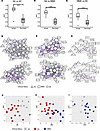 Figure 1
SLIDE analysis of airway brushing RNA-seq data in HCs and participants with MMA or SA. (A) Distributions shown correspond to performance of SLIDE models fitted on actual data versus those fitted using permuted labels (negative controls) across replicates of k-fold cross-validation. Bounds of the box represent the first and third quartile, respectively. The line inside the box corresponds to the median. Whiskers correspond to 1.5 times the interquartile range, and dots represent values beyond that. ****P < 0.0001. P values calculated from a permutation test. (B) Correlation network of features in latent factors (LFs) 6 and 42, which are 2 of 3 latent factors discovered by SLIDE differentiating SA from HC. (C) Scatter plot with SA and HC z scores, a weighted average of each patient’s transcriptomic expression in terms of the features present within each LF. The x and y axes represent each participant’s respective LF score. Dots are color coded by participant condition. (D–F) The corresponding data for SA versus MMA comparison, with correlation network of features in LFs 63 and 30 depicted, which are 2 out of 5 LFs discovered by SLIDE differentiating SA from MMA. (G–I) For MMA versus HC comparison, correlation network of features in LFs 15 and 33 shown are 2 of 4 LFs discovered by SLIDE differentiating MMA from HC. For correlation networks, triangle nodes (Δ) indicate greater expression in HCs, whereas squares (□) and circles (○) represent the same for patients with MMA and SA, respectively. Purple edges indicate positive correlation, and green edges show negative correlation. Edges are only present if they have a strength of |R| > 0.4. Edge thickness indicates strength of correlation. Only nodes that passed a loading and AUC threshold were included.
Thus, the SLIDE model picked up what we believe is a novel expression program not appreciated earlier. Interestingly, the LFs included some genes not identified in the conventional differential gene expression analyses. This is by design, as genes that do not meet traditional univariate significance thresholds can still be part of a core overall multivariate signature (due to additive effects) that is necessary and sufficient to infer differences between the groups of interest. Corresponding analyses for the MMA and HC groups also provided significant differences using 4 significant LFs (Figure 1, G–I, and Supplemental Figure 2C, AUC ≈ 0.75 across replicates of k-fold cross-validation framework, P < 0.01 using permutation testing). As expected, the most significant difference (AUC ≈ 0.9) was between the SA and HC groups as these reflect two ends of the spectrum. However, unexpectedly, the difference between SA and MMA (AUC ≈ 0.85) was higher than the difference between MMA and HC (AUC ≈ 0.75), suggesting that SA and MMA are more divergent in terms of expression profiles than MMA are from HC (Figure 1, A, D, and G).
We next investigated whether the significant LFs revealed by SLIDE could be validated in an independent cohort. The NHLBI Severe Asthma Research Program (SARP) is a multicenter cohort study of SA that also includes MMA and HCs for comparison. The participants in SARP are deeply characterized clinically and undergo investigative procedures to acquire samples for analysis. A subgroup of 152 individuals (41 HC, 48 MMA and 63 SA; Supplemental Table 1) underwent bronchoscopy with airway brushings for RNA, which were then processed and analyzed for bulk RNA-seq. Indeed, the LFs were cross-predictive in SARP (AUC ≈ 0.75) (Figure 2A). Since the SLIDE model was trained using only the IMSA cohort (includes identification of the composition and relative importance of the significant LFs), and this was evaluated on a completely orthogonal cohort (SARP), this represents a stringent validation on completely held-out data. Thus, 2 levels of evidence — k-fold cross validation of our data demonstrating model robustness on held-out data and cross-prediction on an orthogonal cohort — further strengthened the generalizability of the identified LFs.
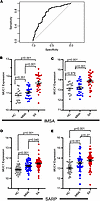 Figure 2
Cross-prediction using the model trained solely on the IMSA cohort to the SARP cohort (model blinded entirely to the SARP cohort for training) and expression of membrane-tethered mucins MUC1 and MUC4 in bronchial epithelial brushings of study participants. (A) Five significant latent factors were derived from the SA versus MMA comparison based on the IMSA cohort (using corresponding airway brushing bulk RNA-seq data). This model was used to cross-predict on the SARP cohort (85 SA and 65 MMA) and achieved an AUC of 0.75 (test cohort). (B) Analysis of MUC1 and (C) MUC4 expression in bulk RNA-seq data of bronchial epithelial brushings derived from the IMSA cohort and (D) and (E) are the corresponding data derived from bronchial brushings of the SARP cohort. Kruskal-Wallis with Dunn’s post hoc testing (B–E).
Core LF genes MUC1 and MUC4 are increased in SA in both IMSA and a confirmatory cohort (SARP). We sought to validate these findings in the full IMSA cohort as well as confirm them in a second independent cohort. We examined MUC1 and MUC4 expression in bronchial epithelial cells (BECs) recovered by airway brushings from RNA-seq data for the full IMSA cohort (n = 68). We observed significant elevations in MUC1 and MUC4 expression in SA compared with HC and compared with MMA in this cohort (P < 0.001; Figure 2, B and C). These data confirmed that increased expression of these genes identified in the significant SLIDE LFs were associated with disease severity in the cohort at large. To validate our findings, we also investigated MUC1 and MUC4 expression in the separate, larger cohort, SARP. Analyzing the dataset for MUC1 and MUC4 expression showed a similar pattern to the IMSA cohort, with significant elevations in SA compared with HC (P < 0.001; Figure 2, D and E). Notably, the MMA expression differed from IMSA, with increased expression in the MMA group compared with HC (P < 0.001). However, SA mean expression remained significantly elevated compared with MMA in the case of MUC1 (P = 0.045). While mean expression of MUC4 in SA was also higher than in MMA, the difference did not reach statistical significance (P = 0.27). This likely reflects the differences in the regional heterogeneity of participants between the IMSA cohort, local to the University of Pittsburgh, and the SARP cohort, which is multi-site cohort. Notably, there is substantial geographic variability in exposures to particulate matter such as PM2.5 across North America, with western Pennsylvania exhibiting some of the highest levels of PM2.5 and its constituents (44, 45). These environmental differences may contribute to cohort-specific gene expression patterns. Yet, despite these differences in the cohorts, the patterns of MUC1 and MUC4 elevation in both suggested association of these mucins with asthma severity.
MUC1 and MUC4 expression correlate with clinical measures of asthma severity. We next assessed the factors identified by SLIDE for correlation with clinical parameters of disease. We examined the correlation of MUC1 and MUC4 with percentage predicted FEV1 (race neutral equations). Both genes showed a strong negative correlation with FEV1 in IMSA (MUC1 r = –0.47, P < 0.001; MUC4 r = –0.47, P < 0.001) (Figure 3A). In the case of the SARP cohort, the correlations for the mucin genes were not as strong but remained significant (MUC1 r = –0.19, P = 0.05; MUC4 r = –0.29, P < 0.01) (Figure 3A).
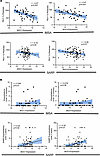 Figure 3
Asthma clinical correlations with MUC1 and MUC4 expression. (A) FEV1% predicted plotted against expression of MUC1 and MUC4 obtained from RNA-seq data of airway brushings from the IMSA and SARP cohorts. (B) Number of exacerbations in the 12-month period of cohort enrollment in IMSA was plotted against expression of MUC1 and MUC4 obtained from RNA-seq data of airway brushings from the IMSA cohort. In the case of the SARP cohort, the data show number of cumulative prospective exacerbations occurring from baseline visit through year 3 in SARP was plotted against expression of MUC1 and MUC4 obtained from RNA-seq data of airway brushings from the SARP cohort. Spearman’s nonparametric correlations, linear regression (solid line) with 95% CI (shaded blue) shown on each scatter plot for reference.
While lung function is a major determinant of asthma symptoms and physiological burden, exacerbations are the other primary driver of asthma morbidity. We assessed the correlation of MUC1 and MUC4 with prospective exacerbations in the IMSA cohort (individuals reported exacerbations at 12-month visits after bronchoscopy). MUC1 showed a positive correlation with the number of exacerbations in that 12-month window (MUC1 r = 0.345, P = 0.01; Figure 3B). MUC4 showed a smaller correlation but did not reach significance (r = 0.216, P = 0.08; Figure 3B). We also reviewed data on exacerbations in the SARP cohort. Here, both genes showed significant associations with prospective exacerbation numbers over years 1–3 in the SARP cohort (MUC1 r = 0.22, P = 0.02; MUC4 r = 0.32, P < 0.01; Figure 3B). These data show that MUC1 and MUC4 associate with both decreased lung function as well as exacerbations, 2 of the primary determinants of clinical asthma severity. However, our data revealed differences in relationships between MUC1 and MUC4 expression and disease features between the IMSA and SARP cohorts, raising the possibility that geographically driven environmental factors contribute to these differences.
Extracellular collagen deposition does not distinguish between SA and MMA. Airway remodeling, marked by increased collagen deposition, is a common feature of both an obstructive airway disease such as asthma and a restrictive lung disease such as pulmonary fibrosis (46, 47). However, no significant difference in collagen content was detected between endobronchial biopsy specimens from patients with SA and MMA when stained with Masson’s trichrome (Figure 4A), as quantified by percentage collagen staining (P = 0.54; Figure 4B), consistent with previous observations of no difference in collagen deposition in severe versus milder disease (48). Examination of expression of the type I collagen gene, COL1A1, in the IMSA and SARP cohorts showed no significant difference in expression between HC, MMA, and SA (Figure 4C). Finally, we also assessed the association of collagen expression (COL1A1) in both the SARP and IMSA cohorts with percentage predicted FEV1, which revealed a lack of association (P = 0.875 for IMSA, P = 0.159 for SARP; Figure 4D).
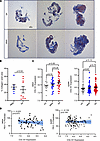 Figure 4
Collagen deposition in endobronchial biopsy specimens from patients with asthma. (A) Representative images (magnification, ×4) of Masson’s trichrome–stained endobronchial biopsies obtained from patients with SA and MMA. Scale bar: 200 μm. (B) Collagen quantification as percentage trichrome+ pixel area per total tissue area in Masson’s trichrome–stained human endobronchial biopsies obtained from patients with SA (n = 9) and MMA (n = 6). (C) COL1A1 expression in IMSA and SARP cohorts from bulk RNA-seq of bronchial epithelial brushings by asthma severity. (D) FEV1% predicted was plotted against expression of COL1A1 obtained from RNA-seq of airway brushings from IMSA and SARP cohorts. Data plotted as mean ± SEM. Spearman’s nonparametric correlations, linear regression (solid line) with 95% CI (shaded blue) shown on each scatter plot.
CEACAM5 is a DEG for SA compared with MMA and associated with MUC1 and MUC4. While CEACAM5 was not included in the identified LFs from the SLIDE model, it was one of the most strongly expressed DEGs in the analysis of SA versus MMA (Supplemental Figure 1) and its increased expression was previously observed in other SA cohorts (28, 49, 50). The absence of CEACAM5 in the LFs is likely reflective of individual important biomarkers that are not, however, part of an overall gene coexpression program that is necessary and sufficient to distinguish between SA and MMA. Analysis of CEACAM5 expression in the IMSA cohort at large showed significant elevation in SA compared with both MMA and HC (P < 0.01; Supplemental Figure 3A). CEACAM5 expression also tracked strongly with both MUC1 (Spearman’s r = 0.68, P < 0.01) and MUC4 (Spearman’s r = 0.69, P < 0.01) (Supplemental Figure 3, B and C). CEACAM5 also showed negative correlation with percentage predicted FEV1 (r = –0.62, P < 0.01) and positive correlation with prospective asthma exacerbations (r = 0.368, P < 0.01) (Supplemental Figure 3, D and E). In the independent SARP cohort, both SA and MMA showed a significantly increased expression of CEACAM5 compared with HC (P < 0.01), although the difference between SA and MMA was not statistically significant (P = 0.27; Supplemental Figure 3F). Assessment of CEACAM5 expression with MUC1 and MUC4 expression similarly showed strong correlation (MUC1 Spearman’s r = 0.52, P < 0.01; MUC4 Spearman’s r = 0.62, P < 0.01; Supplemental Figure 3, G and H). CEACAM5 showed negative correlation with percentage predicted FEV1 (r = –0.39, P < 0.01) and positive correlation with prospective asthma exacerbations (r = 0.38, P < 0.01) (Supplemental Figure 3, I and J).
Pathway analysis of gene networks identified by SLIDE identify keratinization, airway remodeling, O-linked mucin glycosylation, and arachidonic acid metabolism as discriminating pathways between SA and MMA. Next, we focused on elucidating pathways to which these LFs corresponded. We used a 2-pronged approach involving conventional gene set enrichment analysis (GSEA) and a large language model–based (LLM-based) approach — gene set artificial intelligence (GSAI). GSEA revealed enrichment in keratinization in SA when compared with HC or MMA as well as increase in O-glycosylation of mucins (Figure 5, A and C), the latter aligning with the finding of MUC1 and MUC4 as core LF genes in SLIDE analysis of SA versus MMA (Figure 1 and Supplemental Figure 2). In addition, compared with MMA, an increase in arachidonic acid metabolism, particularly in relation to 15 lipoxygenase, was also identified in SA (Figure 5C) that we previously described (51, 52), and is associated with ferroptotic processes in airway epithelial cells (53). While GSEA allows us to aggregate small-additive effects of expression differences in the identified genes in coherent pathways, they are inherently constrained by the structure of known pathways. Since LFs reveal novel, context-specific groups of co-expressed genes, they may inform novel biological outcomes not included in established gene sets/pathways used in conventional overrepresentation or gene-set enrichment analyses. To address this, we adopted GSAI (54) to allow unbiased queries of the genes in the LFs against the known literature. GSAI uses a pretrained bidirectional transformer (BERT) model to aggregate LLM responses and comes up with coherent biological process descriptions for these LFs. GSAI has the capacity to uncover novel functional groupings and combinatorial processes that enrichment tests structurally cannot recover since over representation analysis (ORA) or GSEA can only rediscover categories that are already defined. Furthermore, GSAI demonstrates performance equivalent to or better than conventional ORA/GSEA methods in terms of FDR control. The word cloud synthesizes GSAI outputs as term frequencies to highlight key pathway/functional components identified in the LFs. Use of GSAI revealed that while the differences revealed between SA and HC were primarily centered around immune activation and stress responses (Figure 5B), epithelial and matrix remodeling reflecting keratinization as well as altered ion transport were the key differences between SA and MMA (Figure 5, C and D). Although distinct approaches underlie GSEA and GSAI, it was remarkable that both distinguished SA from MMA by signatures of increased airway remodeling while enhanced ion transport was a key feature of MMA. There were more diverse differences between MMA and HC (Figure 5, E and F).
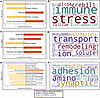 Figure 5
GSEA and GSAI analysis of SLIDE data. (A, C, and E) GSEA plot with pathway on y axis and normalized enrichment score (NES) on x axis arranged by q value. SLIDE features in the (A) SA versus HC, (C) SA versus MMA, and (E) MMA versus HC latent factors (LFs) were input into GSEA to find pathways enriched within the LFs. Pathways with a negative NES are enriched in the participants with lower clinical severity within a given pairwise comparison, and vice versa for positive NES. All pathways significant at q < 0.2. (B, D, and F) Word cloud featuring GSAI output interpretation when features present in SLIDE LFs within the (B) SA versus HC, (D) SA versus MMA, and (F) MMA versus HC comparisons were used as input. Burgundy, indigo, and teal words represent terms enriched in SA, MMA, and HC, respectively. Gold words are common between both conditions in each figure.
Keratinization is noted in endobronchial biopsies in SA. To further investigate the airway remodeling findings, we examined keratin protein content in endobronchial biopsies from the IMSA cohort. While numerous keratins play a role in keratin formation and deposition, we focused on KRT16, a type I keratin, a common keratin (KRT) gene identified in the GSEA analysis of SA versus MMA as well as SA versus HC LFs, as assessed by SLIDE (Supplemental Table 2). It is important to also note that KRT16 is regarded as a stress keratin and is associated with epithelial injury and diseased epithelia (55, 56). Our analysis identified a statistically significant difference in KRT16 protein levels between MMA and SA (P = 0.036) (Figure 6, A and B). To assess clinical outcomes associated with KRT16, we utilized RNA-seq expression data that were available from the full IMSA cohort and in SARP. KRT16 expression showed a significant inverse association with predicted percentage FEV1 in all asthma in both the IMSA (P = 0.006) and SARP (P = 0.044) cohorts (Figure 6C). Notably, this negative correlation with FEV1 in the SARP cohort was driven exclusively by a negative correlation in SA (P = 0.03) with no significant correlation identified in MMA (P = 0.74). While a similar pattern was seen in the IMSA cohort, this correlation was not statistically significant likely due to the smaller number of participants (Figure 6C). Collectively, our data suggest that increased keratinization seen in the airways in SA is independent of lung tissue fibrosis, representing a different pathology and correlated with worsening airway obstruction.
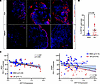 Figure 6
KRT16 protein expression in patients with asthma in the airways of IMSA and relationship between KRT16 expression and lung function in both cohorts. (A) Representative immunofluorescence images of KRT16 protein expression in endobronchial biopsies of patients with SA and MMA in IMSA and (B) quantification as percentage KRT1+ pixel area per total tissue pixel area in the specimens. Data plotted as mean ± SEM and were analyzed by Mann-Whitney U test. Scale bar: 200 μm. (C) FEV1% predicted plotted against expression of KRT16 in RNA-seq data of airway brushings from patients with SA or MMA in the IMSA and SARP cohorts. Spearman’s nonparametric correlation with linear regression for all asthma (black with 95% CI) and severity specific linear regression lines (blue in MMA, red in SA) shown.
Analysis of effect sizes of genes within the significant SLIDE LFs as a predictor of severity shows unique contributions of MUC1 and MUC4 in a pattern different from traditional T2 asthma–associated genes. We also examined the effect sizes, quantified by Cliff’s delta (Figure 7A) and AUC (Figure 7B), of specific genes (T1, T2, T17, mucins and KRT16) in each of the 3 comparisons of interest. The data first showed that conventional T2 genes IL4, IL5, IL13, IFNG, or IL17A were not discriminative of MMA from HC. The expression of these genes was actually higher in HC, likely reflective of CS-mediated suppression of cytokine production in MMA (13). In comparisons between SA and MMA, T1 and T2 cytokine gene signatures were higher in SA compared with MMA, illustrating poor CS response in severe disease (2, 13) and presence of T1-T2 interaction in SA (10, 32). However, the most discriminative genes between SA and MMA were the tethered mucins MUC1 and MUC4 and the cell adhesion molecule CEACAM5, further confirming the importance of these molecules relative to genes we conventionally focus on and target in CS-refractory SA. Consistent with the pathway analysis data, KRT16 was also a strong predictor of SA versus MMA but did not discriminate between MMA and HC. Since MUC4 and CEACAM5 did not consistently separate SA from MMA in SARP, we focused on MUC1 and KRT16 and examined the relationship between these molecules at both the RNA and protein levels, which revealed a significant correlation (Figure 7, C and D, Supplemental Figure 4).
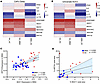 Figure 7
Single genes of interest with discriminatory power across clinical severity. (A) Heatmap based on Cliff’s delta values for several genes of interest for the indicated pairwise comparisons. Each row is a specific gene. Blue cells indicate higher expression in the lower severity, and vice versa for red. Cells that are white have no difference between the conditions. (B) Heatmap based on univariate AUC values using the same genes. (C) Scatter plot of KRT16 and MUC1 expression in bronchial brushing RNA-seq data in IMSA (blue = mild to moderate asthma, red = severe asthma). (D) Scatter plot of KRT16 and MUC1 protein staining (quantified as the percentage of pixel area of the biopsy positive for staining) in endobronchial biopsies from IMSA participants. Spearman’s correlation for C and D with linear regression and 95% CIs shown.
While active smokers were excluded from the SARP and IMSA cohorts, participants with a prior smoking history of less than 10 pack years and more than 12 months of smoking cessation were allowed to enroll. To confirm that our findings were not related to past cigarette use, we examined MUC1, MUC4, and KRT16 expression by prior cigarette use and found no significant difference in expression levels by smoking status in either cohort (Supplemental Figure 5).


