
Abstract
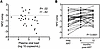
Persistent monocyte activation contributes to HIV-associated neurocognitive disorders (HAND), yet biomarkers that predict neurocognitive impairment before and after antiretroviral therapy (ART) remain incompletely defined. We evaluated monocyte subsets and activation markers in participants from the SEARCH007 cohort before ART initiation and at 6 and 12 months following treatment. Increased frequencies of CD14+CD16+ monocytes and elevated CD163 expression were associated with worsening neurocognitive performance and HAND severity. Plasma soluble CD163 levels increased with neurocognitive impairment and correlated with plasma HIV RNA levels, while CCR2 expression was associated with a composite neuropsychological performance Z-score (NPZglobal). Notably, CD169 expression was elevated across all monocyte subsets and demonstrated a stepwise increase with worsening neurocognitive impairment. Although ART reduced overall monocyte activation, elevated CD169 expression persisted in some individuals despite virologic suppression. Bayesian kernel machine regression and random forest analyses identified CD169 expression as one of the strongest predictors of cognitive impairment, surpassing plasma viral load, CD4+ T cell count, and several established monocyte activation markers. These findings identify monocyte CD169 expression as a biomarker of neurocognitive dysfunction before and during the first year of ART and support further investigation of its role in HAND pathogenesis.
Authors
Hai Duc Nguyen, Andrew K. Ding-Su, Caroline Soulas, Tricia H. Burdo, Patrick Autissier, Pasiri Sithinamsuwan, Nitiya Chomchey, Jintanat Ananworanich, Victor Valcour, Silvia Ratto-Kim, Woong-Ki Kim, Kenneth C. Williams
This file is in Adobe Acrobat (PDF) format. If you have not installed and configured the Adobe Acrobat Reader on your system.
Having trouble reading a PDF?
PDFs are designed to be printed out and read, but if you prefer to read them online, you may find it easier if you increase the view size to 125%.
Having trouble saving a PDF?
Many versions of the free Acrobat Reader do not allow Save. You must instead save the PDF from the JCI Online page you downloaded it from. PC users: Right-click on the Download link and choose the option that says something like "Save Link As...". Mac users should hold the mouse button down on the link to get these same options.
Having trouble printing a PDF?
- Try printing one page at a time or to a newer printer.
- Try saving the file to disk before printing rather than opening it "on the fly." This requires that you configure your browser to "Save" rather than "Launch Application" for the file type "application/pdf", and can usually be done in the "Helper Applications" options.
- Make sure you are using the latest version of Adobe's Acrobat Reader.


